


Priyakant Ju Mandir Vrindavan, which is also known as Shri Priyakant Ju Temple or the Lotus Temple of Vrindavan, is among the most visually unique contemporary temples in Braj. The temple is located on the Chhatikara, Vrindavan Road near Vaishno Devi Dham and is a great spiritual stop in peace for the devotees, families, photographers and also the travelers who like to escape the narrow lanes of the central part of Vrindavan.
It is the temple of Radha and Krishna (worshipped as priyakant ju) and has gained wide popularity due to its breathtaking lotus architecture, marble fountain, and the illuminated appearance of the temple during evenings. The structure has been reported to be about 127 feet high. According to some sources, the inauguration of the temple took place on 8 February 2016.
The temple is easily accessible as it lies on the main approach road to Vrindavan while others are buried within the narrow lanes of the city. Therefore, it is relatively easier to plan a combined visit with other important places of interest nearby including Prem Mandir, ISKCON Vrindavan, Banke Bihari Temple, Radha Raman Temple, and other Braj pilgrimage sites.
This article includes Priyakant Ju Mandir, Timings, Aarti Timings, Place, Location, Admission Fee, Lotus design, Photography opportunities, Dress code, Directions, Nearby Temples, Time to Visit, Travel Tips for Priyakant Ju Temple Vrindavan.
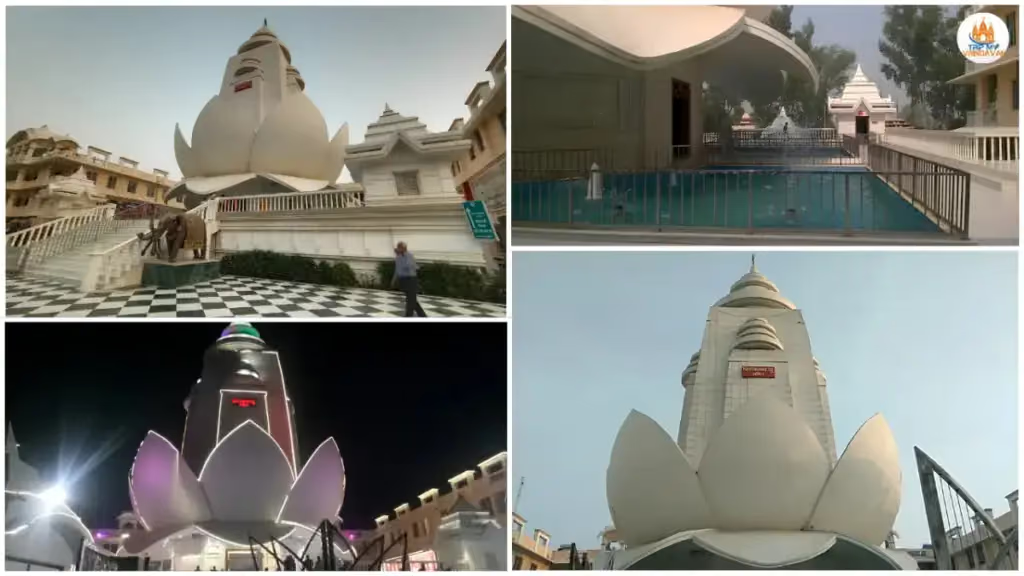
Quick Information About Priyakant Ju Mandir Vrindavan
| Information | Details |
| Temple Name | Shri Priyakant Ju Mandir |
| Popular Name | Priyakant Ju Temple / Lotus Temple Vrindavan |
| Location | Chhatikara–Vrindavan Road, near Vaishno Devi Dham, Vrindavan, Uttar Pradesh |
| Deities | Radha and Krishna |
| Architectural Style | Lotus-inspired modern temple architecture |
| Approximate Height | 125 feet |
| Main Material | White Makrana marble |
| Inauguration | 8 February 2016 |
| Entry Fee | Free for general darshan |
| Nearest Major Railway Station | Mathura Junction |
| Best Experience | Evening visit, especially around sunset and aarti |
| Ideal Visit Duration | Around 1–2 hours |
| Photography | Exterior photography is the main attraction; follow temple restrictions inside |
| Location Advantage | Situated on the Chhatikara–Vrindavan Road |
The exact hourly programme can differ as per the seasons, festivals, religious special programme, or temple function event. Published hourly programmes differ minutely, particularly regarding the time when the entrance of visitor is stopped, i.e, morning, and evening, so visitors should verify the actual schedule of the day from the locals before making their plans based on one or the other aarti.
Priyakant Ju Mandir Vrindavan Timing
Having knowledge about the Priyakant Ju Mandir Vrindavan timings is a necessity because of the same reason of division between morning and evening darshans that are prevalent at many Braj temples. A commonly displayed schedule gives the approximate timings like:
| Darshan Session | Commonly Published Timing |
| Morning Darshan | 5:00 AM – 12:00/12:30 PM |
| Evening Darshan | 4:30/5:00 PM – 8:30/9:00 PM |
| Morning Aarti | Around 5:00–6:00 AM, depending on season |
| Shringar Aarti | Around 8:00–9:00 AM |
| Raj Bhog | Around 11:45 AM–12:00 PM |
| Sandhya Aarti | Around 6:30–7:30 PM |
| Night Closing | Around 8:30–9:00 PM |
Published information is not always giving the same detailed calendar. For example, some up-to-date travel manuals show summer darshan as roughly 5:00 AM, 12:30 PM and 5:00 PM, 9:00 PM, whereas other sources are listing 5:00 AM, 12:00 PM and 5:00 PM, 9:00 PM. On the other hand, old timetables are given 6:00 AM, 12:30 PM and 4:30 PM, 8:30 PM.
Summer Time
In general, if you come during the warmer months you will experience two sessions of darshan: one in the early morning and another in the late evening. At the moment,
one of the available printed calendars reads:
- Morning: 5:00 AM 12:00/12:30 PM
- Evening: after 5:00 PM 9:00 PM
The exact schedule may vary during festivals, programmes, etc. One day is not like another. Even different temples will have different schedules.
Winter Time
Mostly the timetables printed for winter season have earlier morning opening and an earlier closing of the evening session.
Here is an example of one of the published timelines:
- Morning: 6:00 AM 12:00 PM
- Evening: 4:00 PM 8:00 PM
As religious places change their programmes depending on a devotional calendar, it would be better to contact local temple authorities in case your visit is planned with the help of time.
Sunetram Bazaar Temple, Aarti Timings
An Aarti ceremony is the perfect means of gaining insight into the beauty of the Priyakant Ju Mandir. Do not just consider this monument purely as another tourist attraction but, instead, take ample time during one of the main prayers so that you are able to experience the spiritual environment around it. Let us have a look at some regularly printed times of the following functions:
Mangala Aarti
After the morning darshan, the priests sing Mangala Aarti while they circumambulate the deity. Depending on the season/schedule it starts, let us say, around 5 or 6 AM. Normally, the morning hours are a period of quiet and therefore are perfect for visitors who want to make darshan more calmly.
Shringar Aarti
Shringar Aarti is the morning offering. It is generally scheduled to start at about 8-9 AM by published timetables. However, it is always advisable to check locally as schedules may deviate a little.
Raj Bhog
The late morning prayer is when the Raj Bhog ceremony normally takes place.
Sandhya Aarti
Sandhya Aarti in the evening is one of the most exciting activities of the day for tourists. Depending upon the seasonal calendar, it takes place in sources around 6:30, 7:30 PM. When you have devotional programme, temple illumination along with fountains and light you get a very good view. Photographers and those who come for the first time can take their best pictures or experience the atmosphere at this time.
Why Is Priyakant Ju Mandir Called the Lotus Temple of Vrindavan?
Priyakant Ju Mandir is popularly known as the Lotus Temple of Vrindavan, not only because of its name but also for being a lotus-inspired temple. Being a lotus-inspired temple and not just a flower name, it has very modern look. The older stone temples of Vrindavan have very specific features which the Priyakant Ju Mandir temple does not have. On the other hand, the temple has a very modern look while still being traditional.
The temple has a lotus-shaped building with various parts that are arranged in layers which make it look like a beautiful flower that is in full bloom with the help of the central shrine. Additionally, due to the presence of white marble in the temple the symbolic meaning of a lotus is strengthened.
In broad daylight, the temple structure is quite eye-opening so that it is able to create a stark contrast with the background around it, while at nighttime, illumination changes its look completely. The temple's structural form has made it a primary attraction of the temple, especially for tourists who would like to photograph the town of Vrindavan and its temples aside their tradition.
Priyakant Ju Mandir Architecture, The 125-Foot Lotus Structure
The Priyakant Ju Mandir architecture is probably the first thing about the temple that would grab the visitor's attention. The construction is reportedly around 125 feet high and made up of Makrana marble from Rajasthan.
The distinguishing characteristics are:
- Lotus design
- White marble
- Tallest central temple
- Petal-shaped decorative layers
- Water fountains around the temple
- Open surrounding areas
- Evening lightning
- Including smaller worship places within a grand compound
So, it is a temple with an inner divine symbolism combined with a highly photogenic architectural layout.
Makrana Marble and the White Exterior
The building of the temple using white marble has a lot of advantages apart from giving the temple a clean and radiant appearance. Makrana marble is mostly used for architectural construction in India. In the case of the Priyakant Ju Mandir, it works very well as the marble is white, so the temple will look white in the daylight and when it is lit. Photography enthusiasts would enjoy a lot at Priyakant Ju Mandir as each part of the day provides a new set of interesting visuals.
We are not only going to have a white, light marble during the day but the warm sun will add a softer tone that will be reflected beautifully in the marble when the sun sets. The temple at nighttime will be a sight of its own as the various sources will be lighting up.
Priyakant Ju Mandir Fountains and Lotus Design
The water elements surrounding the temple are major features of the visual design of the temple. Rather than just being a decorative landscape, the water fountains serve the purpose of reflection and movement while the marble, the main architectural material is still.
If you take a great composition from the correct angles, you do not have to photograph the front of the temple only. Fountains look very pretty when the temple is all brightly lit up. Because Priyakant Ju Mandir becomes such a different place at night from what one would have expected earlier, we think it is wise always to spend some extra time at the temple rather than just treat Priyakant Ju Mandir as one of the 15-minute sights.
Spiritual Significance of Priyakant Ju Mandir
Priyakant Ju Mandir is dedicated to Radha and Krishna, central figures of Braj's devotional tradition.
Vrindavan is traditionally associated with the childhood and youthful pastimes of Lord Krishna, and temples throughout the town express different forms of Krishna devotion. At Priyakant Ju Mandir, the name Priyakant Ju is associated with the beloved form of Krishna worshipped with Radha.
The temple therefore serves two audiences at once: devotees visiting for darshan and travelers interested in the distinctive cultural and architectural landscape of modern Vrindavan.
The presence of smaller shrines dedicated to deities such as Shiva, Ganesha and Hanuman has also been reported within the complex.
Priyakant Ju Mandir Entry Fee
Do I Need to Pay Entry Fee at Priyakant Ju Mandir?
Entry and darshan are both free of charge. Latest information from travel experts’ states that there is not a general entry ticket, no mandatory online bookings, and no regular entry charge for temple visitors. That makes Priyakant Ju Mandir an excellent choice and very convenient for those wishing to sightsee in Vrindavan and want to add one more temple to their list.
One should, nonetheless, keep in mind that the cost of prasad (offering food to deity and taking blessed food), donation to the temple, offerings etc. are normal expenses one would typically come across.
- Donations
- Offerings
- Prasad
- Local transportation fees
- Travel-related expenses such as parking
These should not be confused with a compulsory temple entry fee.
Priyakant Ju Mandir Photography Hints
Photography at Priyakant Ju Mandir is one of the main attractions for many of the visitors. Unlike the regular temple architecture with a plain front, the mandira has a lotus-inspired form which is much more attractive for taking pictures. Besides that, water features around the place provide extra composition possibilities.
When to Photograph Best
You can go to photograph these three times:
1. Early Morning
Light in morning is usually softer as the daylight becomes harsher. Therefore, there is less chance of getting contrasty and harsh pictures.
This time of day is good for:
- Architecture
- Clean exterior compositions
- Wide-angle shots
- Quiet atmosphere
- Family photographs
2. Sunset & Blue Hour
Arguably, this time gives some of the best visuals. During this time of day, the marble temple can take on warmer color tones and the sky will still colorfully remain with the natural light gradually decreasing before turning on the lights. The change from the daylight to the night is reflected when the temple lights start getting brighter.
3. Night after Lighting
Around this time the temple lights up its full beauty and the temple of the lotus looks quite different from what you will witness in the daytime.
In conclusion, combining white marble temple, light, fountains, and evening sky can make the most compelling visuals of your visit at least. As for visiting hours, visitors have mentioned that the time of 7:00 and 7:30 PM is really special for photography but, obviously, it is affected by the seasonal light changes.
Can We Take Photos Inside Priyakant Ju Mandir?
Photography rules must be treated differently for the exterior and the sanctum. Exterior architecture and surrounding areas are probably the main photography attractions. Inside the inner sanctum or of the deity, photography might be restricted. In that case visitors should also follow guidance from temple staff.
We strongly recommend getting permission before taking photographs of any interior religious places rather than just assuming permission for the whole complex if photography of the exterior is permitted. This is especially true during aarti, Bhog and other religious ceremonies.
Best Photography Spots at Priyakant Ju Mandir
Architecture-oriented photographers usually prefer shots showing the whole lotus design rather than only the entrance. Some great framing ideas are:
Face Front Shot
Centralized images can best highlight the symmetric nature of the lotus-inspired pattern.
Still-Water Reflection
Reflections will add dimension to the picture provided the body of water allows that.
Upward-View Architectural Photograph
From a viewpoint a bit lower than eye level the towering, say, 125-ft high structure will look so grander.
Dusk Profile
Capturing the structure silhouetted against the sky in the late evening could yield exciting results.
Indigo-Hour Photo
This happens particularly beautifully when the deep blue hues of the dusk sky have not yet disappeared whereas the glow from the temple is already on.
Open-Window Family Photo
Wide enough area on the ground allows both people and the background building to be in frame.
Priyakant Ju Mandir Dress Code
The temple is sacred and holy place therefore one should wear appropriate modest clothes if they are going there.
- Nobare shoulders
- Full length of legs to be covered
- It is necessary to keep your clothes decent and traditional while being comfortable simultaneously.
- It is entirely forbidden to wear extremely short garments that are not appropriate at a sacred place like this.
- The visitor should have a light wrap ready during the time he/she thinks it will get chilly.
The temple visitors will also need to go barefoot before entering the specified parts of the temple. The reason to issue the dress code is simply to warn the temple goers that Priyakant Ju Mandir was a religious place first before it is a site of recreation and tourism.
How to Reach Priyakant Ju Mandir Vrindavan
The wonderful thing about Priyakant Ju Mandir is its location on the Chhatikara, Vrindavan Road close to Vaishno Devi Dham. This puts the temple at an arm's length from the town of Mathura or Vrindavan so it does not pose as a challenge to reach it by road when you think about other temples that are really tucked away deep within Vrindavan's older lanes.
From Mathura Junction Railway Station
Mathura Junction is probably the one and only railway station which sees the coming and going of local and tour trains and it is a place from which the region of temple town and holy places is very popular.
The distance on Google Maps from the train station to the temple of Priyakant Ju is around 13 km 20 km depending on the exact destination at Mandir and traffic and other similar conditions which might come into play on the way from the train station to Mandir.
From Mathura the visitors can choose for instance the modes of transport like:
- Autorickshaw
- E-rickshaw
- Taxi
- Private car
- Local bus services
From Vrindavan
Going to the temple from the center of Vrindavan by Chhatikara, Vrindavan corridor is another option. Compared to temples within the ancient part of Vrindavan, the road connection seems to be relatively easier to reach the temple.
From Delhi
People traveling from car and reaching Mathura-Vrindavan region are normally using the motorway as a primary means to go and then the road going towards Vrindavan continues from there.
The driving time really depends upon the traffic and from where you start, so it would be wise on your side in your holiday to give yourself some extra buffer time during the weekend, holidays, and the day of the religious festival.
Priyakant Ju Mandir Location
Mathura is a major gateway railway station for the region.
Various sources suggest that the distance between Mathura Junction and the Shri Priyakant Ju Mandir is about 13, 15 km; however, since it highly depends upon the route taken, the traffic condition and so forth the real distance and time taken may vary slightly.
From the railway head office (station), a visitor can:
- Autorickshaw
- E-rickshaw
- Taxi
- Private car
- Use of the local passenger transport (Local bus services)
From Vrindavan
Coming via road the temple is about few km only from the heart of Vrindavan on the Chhatikara, Vrindavan Road corridor.
A comparison of the road access for such temples with those which are located deeper within the narrow lanes of the old Vrindavan town clearly favors the present set-up. Hence, even though a temple that could have been the closest among several similar ones, still having it a bit away does not make it harder to reach by car or any other ground vehicle.
For instance, it may even be easier to get there from your hotel
Priyakant Ju Mandir Travel Info Delhi to Temple
People coming from the National Capital generally take the major highways to the Mathura-Vrindavan area and then proceed towards Vrindavan via Mathura. The time and date of departure and road traffic are the deciding factors for the total travel time; for safety, one should allocate some time extra in case of busy weekends/festivals/ or religious events.
Priyakant Ju Mandir location
Generally, Shri Priyakant Ju Mandir is located at: Shri Priyakant Ju Mandir, Chhatikara Marg, near Maa Vaishno Devi Dham, Raman Reiti, Vrindavan, Uttar Pradesh 281121
The temple's position next to the main road is an advantage for visitors who plan to visit different temples and make a religious pilgrimage.
What Time is Best to Visit Priyakant Ju Mandir
Priyakant Mandir is worth visiting but the choice of the best time can depend greatly on the kind of experience one wants.
Suitable for Darshan
The morning hours will be quite suitable if one seeks a spiritual darshan.
Besides the spiritual factor, the air and climate are much friendlier in the early mornings. Moreover, the soft morning light is ideal for photographing.
Suitable for Shooting Images
It becomes more exciting if one takes a photograph in the late afternoon and continues throughout the evening.
- One will get the chance to see the daylight architecture of the temple and enjoy the colors of the sunset
- As the blue hour follows the sunrise it is a time for photographing beautiful light effects.
- Temple illumination in the late night and a devotional atmosphere of evening can be a perfect shot together as well!
Suitable for an Aarti Viewing
Visit the temple for aarti at around the aarti time but get to the exact schedule of the particular aarti at the place.
Suitable Family Visit and Travel Comfortably
Mid and late afternoon hours can be convenient to visit the temple especially from the end of the summer period. But one should be ready to take more time as on festival days the numbers of visitors can be quite large!
How Long Should the Visit to Priyakant Ju Mandir Last?
A simple darshan would take a visitor about 15 to 35 minutes. However, if the visitor wants to relax and spend a long time at the temple we suggest 1 to 2 hours.
A much lengthy stay will be rewarding if visitor wants to:
- Stroll around inside Temple and the outer surroundings
- To watch aarti performer
- Get pictures clicked from outside of the Temple
- See the fountains
- Taake time for devotion in surrounding areas
- Have a great combination of sunset photographs and evening darshan
On the other hand, visitors who are mainly coming to the Temple for photography are advised not to rush around with the other visitors right after the darshan!
About the Festival Times Visit to Priyakant Ju Mandir
Touring through Vrindavan and visiting Priyakant Ju Mandir will bring more hustle, more tourists during the festival times of religious importance.
Special activities like religious preaching events and devotional singing can alter the regular visitor atmosphere to a big extent too!
Priyakant Ju Mandir has been the venue for a host of big religious festivals and gatherings. For example, Shri Devkinandan Thakur Ji related events are often held there. On 2026, a programme, "Markandeya Purana Katha", was held at this place from 19-25 March.
During these extraordinary events, visitors have to be ready for some changes and disruptions such as:
- Visitors can expect an increase in the number of crowds
- Bigger traffic problems
- More travel delays
- Challenged vehicle finding spot
- Modified normal access
- Short-term schedule changes
If someone is looking for a tranquil travel, the visitor probably will prefer days without special programmes!
Priyakant Ju Mandir as a Family Destination
Temple, Priyakant Ju, can easily be family-friendly because it is located on a highway which is a very major road. This is not only a very convenient place to be from but it is also an accessible one because a lot of temples in the old part of Vrindavan are hidden and cannot be visited easily due to their very narrow lanes.
Architecturally speaking, Priyakant Ju Mandir will offer very interesting visuals that can even be a major drawing point towards the place to young visitors and first-time visitors who do not have much religious background.
To avoid unnecessary midday heat exposure, we recommend older visitors not to have their main visit on a very hot day but at a time when it is a cooler morning or evening period. The older person might get more out of a shorter visit.
Carrying sandals, drinking water, and bringing some basic personal items are very important for the family especially during hot weather.
About the differences between Priyakant Ju Mandir and traditional Vrindavan Temples.
It is a very different experience if one comes to a traditional temple. Traditional temples in Vrindavan like Banke Bihari Ji which are the old-time temples, and Radha Raman/Radha Vallabh, which are not modern temples, are very much tied with the old-time religious traditions and the city culture. Priyakant ju Mandir, on the contrary, can really be said as the temple that has a very different style of architecture and surroundings that are completely open.
Due to that difference in nature, it is recommended that Priyakant Ju Mandir should be included on an extended visit along with other traditional temples rather than simply compared with old temples.
As it is very much part of the religious side of things, one will be experiencing both the historical side and the modern side of temples and devotion in Vrindavan if one chooses a mixture of them.
One-Day Itinerary of Vrindavan
A one-day tour that is wisely planned will let us see all the main temples, holy places, serene ghats & worshipful mood, without feeling the pressure of the clock running out while we are trying to reach the places.
Daytime: Visit Main Temples
- 6:00 AM, Reaching Vrindavan: You have to be early to avoid large crowds and heavy daytime weather.
- 6:15 AM, Banke Bihari Temple: Commence the pilgrimage by getting yourself blessed with the morning darshan at one of the most cherished Krishna temples of Vrindavan.
- 7:45 AM, Radha Vallabh Temple: Proceed to this ancient temple which is affiliated with the Radha Vallabh sect.
- 8:30 AM, Teatime: After being in such busy temples, take some rest, a drink & meal, to gather your spiritual energy and energy.
- 9:30 AM, Seva Kunj & Nidhivan: Visit these holy places where the devotional aspect of the Radha-Krishna Leela will reveal itself to one.
Late morning: Keshavanatheshwara Temple visit
- 11:00 AM, Keshavatar Temple: This is an exquisite Krishna temple located at the western end of Vrindavan. One can enjoy the beauty of the Yamuna while meditating.
After breakfast, one can spend some time at one's leisure without getting up in Vrindavan city.
Lunch & Rest
- At 1:30 PM, Lunch: Enjoy a light lunch with the surrounding of the place at a nearby eatery.
- 2:30 PM, Rest: Especially in the summertime, if you get exhausted, take a rest before exploring more in evening.
Sunset: Chandroday Mandir and Keshi Ghat
- 3:30 PM, Vrindavan Chandroday Mandir: Take the opportunity to witness a very ambitious and grand Krishna temple project whose monumental architecture is known as the planned feature.
- 5:00 PM, Keshi Ghat: Enjoy the quiet hours of your stay by the river Yamuna.
- 6:00 PM, Evening Darshan or Evening Devotion: Depending on the time of the day, it should end with a spiritual experience in the sacred temple.
- 7:00 PM, Dinner & Checkout: Grab a quick dinner and make a move back home or conduct the onward travel.
Tip for Travelers
Kindly verify the temple timing before visiting, as especially on the occasion of festival seasons and other religious events, the schedule might alter and the arrangements for the entries can also change. For travelers in a family group, senior citizen ones, and those visiting the place in the season of high demand, cutting down on number of points will certainly make the experience a lot more pleasant.
Plan Your Mathura Trip with Trip My Vrindavan
Embark on the sacred journey to Mathura, Vrindavan Govardhan, Gokul, Barsana, and Nandgaon is an enriching spiritual experience but without the help of an expert, it might seem daunting. There is a lot to take care of starting from the travel route to managing temple visits efficiently.
Trip My Vrindavan has carefully developed pilgrimage tours and local sightseeing packages to provide the perfect balance of comfort, convenience, and a profound spiritual experience. Every aspect of the tour, right from planning the itinerary to the means of transport, has been thoroughly thought out to cater mainly to family and solo travelers as well as short business trips.
Leveraging our local knowledge and efficient travel planning, you will be able to enjoy the Lord Krishna's sacred territory without the burden of having to take care of all the details yourself.
Benefits of Picking up Trip My Vrindavan
- Hassle-free travel: you don't need to think about the route, transportation, or travel arrangements
- Itineraries that are customisable: We tailor the tours based on your schedule and preferences
- Local knowledge: We will provide you with a real understanding of the culture and the spiritual significance of the places.
- Comfort and Safety: Trustworthy transportation means and well-organized arrangements to avoid any accidents.
- Time efficient: You will be able to see all the major attractions in the shortest possible time frame.
- Deeper Spiritual Experience: You will be able to focus on devotion rather than the hustle of travel.
Your experience with Trip My Vrindavan will not be just another trip but will lead to a deeply spiritual, peaceful, and unforgettable journey.
Also BOOK: Same Day Mathura Vrindavan Tour Package – Explore the top temples and spiritual attractions of Mathura in one day with a well-planned sightseeing itinerary.
Check out Trip My Vrindavan’s travel packages.
plan your upcoming trip with us and experience a divine journey like never before!
plan your upcoming trip with us and experience a divine journey like never before!
📞 Call Us: +91 7078723132 | +91 9557104160
📲 WhatsApp Us: +91 7078723132 | +91 9557104160
🌠Visit Our Website: Trip My Vrindavan | Vrindavan Mathura Tourism
🔗Explore all our packages here 👉 View All Packages
🔗 Read Our Blogs for Travel Inspiration: Trip My Vrindavan Blogs
Destinations Near Priyakant Ju Mandir You Might Like to Visit
Thanks to Priyakant Ju Mandir's location along a significant road to Vrindavan, it is very convenient to couple your visit with the exploration of several surrounding attractions.
Top recommendations for combining are:
Prem Mandir
A large, modern Vrindavan temple that is especially appreciated for its exquisite white marble structure, intricate decorative works, and beautiful light display in the evenings.
ISKCON Vrindavan
Priyakant Ju Mandir is quite far from it but one of the prominent places of worship in Vrindavan that regularly draws in a substantial number of pilgrims from India and abroad.
Banke Bihari Temple
Vrindavan locals and temple-goers know this as one of the most popular Krishna temples in the city
Radha Raman Temple
An ancient place of worship, which is not only a site for offerings but also has ties with the Goswami lineage of Vrindavan.
Vaishno Devi Dham
Its proximity to Priyakant Ju Mandir especially makes this temple one of the very few spots one could easily include in a road tour of this part of Vrindavan.
Hotels / Guest Houses Near Priyakant Ju Mandir
There is ample accommodation in Vrindavan, ranging from cheap lodgers and inns of small budgets to fancy hotels and ashrams offering spiritual retreats. The present inventory of the District Mathura office is of Shanti Sewa Dham at Priyakant Ju Mandir, Chhatikara, Vrindavan Road, and other Vrindavan places of the similar kind.
If you plan to stay in Vrindavan and need some place, please, think of, but not necessarily stick to, these factors:
- Distance to the main pilgrimage temples
- Transport to and inside the property
- Spaces allocated to guests
- Comforts and features a family usually looks for
- Fan or air-con units when you need it most in summer
- The location and availability of eateries
- If the place is available in times of religious gatherings or events
Accommodation in the Chhatikara, Vrindavan Road area may be a satisfactory solution for those, who are thinking to include a set of new temples and spots in the plan, but are not sure of their timing yet.
You Can Plan Your Trip to Priyakant Ju Mandir in These Ways
Do not Let a Large Crowd Deter You
Priyakant Ju Mandir, on weekdays, especially in the early mornings, is much less crowded. If you are into taking photographs, you will get better pictures during the hours just before sunset and not exactly when the aarti is going on.
Follow Simple Rules and Reservations of Time Periods
It will help if you remember that Priyakant Ju Mandir is an active place of worship. Your camera should be used in a way that does not bother others or their activities. One thing to note is that if it is not allowed in the temple, you should avoid doing it.
Check Temple's Working Hours Before Your Visit
You can rely on official websites to give the most exact information, since the timings are often modified for the sake of different weather conditions during the seasons.
Hydrate to Stay Comfortable
To keep yourself refreshed in summer, it is better to bring some sort of water. Besides, in most places, you will not have access to shade which will be a comfort during the heat hours
Bear Footwear in Mind for Temple Visit
You should be in shoes you can quickly remove and then put on again. Because it is a norm in most Hindu temples to remove footwear before entering.
Reward with a Picture Rather Than a Blockage
To keep things moving, if you spot a devotional procession, entrance or a worshipper who is blocked because of your photographic attempt do not get too close.
Reward with a Picture Rather Than a Blockage 1
Better still, do not interfere with a religious ceremony as it is the highest form of respect, and a photograph will never be more worthwhile.
Expect to Be in a Crowded Temple in the Case Where There is a Special Event Taking Place
To avoid being disappointed and coming with lofty expectations, if the temple is hosting a main festival, it is wise to have a look at the program or even cancel the trip if you do not want to join.
Is Priyakant Ju Mandir Worth Visiting?
- Yes, particularly if we want to experience a different side of Vrindavan.
- The temple may not have the centuries-old visual character of some of Vrindavan's traditional shrines, but its appeal lies elsewhere: distinctive lotus architecture, white marble, fountains, Radha-Krishna worship, and an attractive evening setting.
- For photographers, the temple offers one of the most recognizable modern architectural subjects in Vrindavan.
- For pilgrims, it provides another place for Radha-Krishna darshan.
- For families, its road-side location and open architectural setting make it a practical stop.
- For travelers exploring Vrindavan beyond the most famous temples, it adds variety to the itinerary.
Conclusion
Priyakant Jui Mandir is a unique and elegant temple in Vrindavan, famous for the exquisite white marble architecture, lotus-shaped design, fountains, and serene spiritual environment of the temple. Due to their eye-catching look, the temple is recommended as a place of visit for the devotees as well as the tourists who are interested in seeing the contemporary temple architecture f Vrindavan.
In order to get the most out of your visit, you might consider coming here towards the end of afternoon and staying till the evening to experience different moods of the temple and also to witness the lighting at night. As the timings of darshan and aarti might change during different seasons and festival days, before coming you should always check for the up-to-date schedule.
of Radha-Krishna worship and a contemporary addition to the spiritual landscape of Braj.
📞 Call Us: +91 7078723132 | +91 9557104160
📲 WhatsApp Us: +91 7078723132 | +91 9557104160