
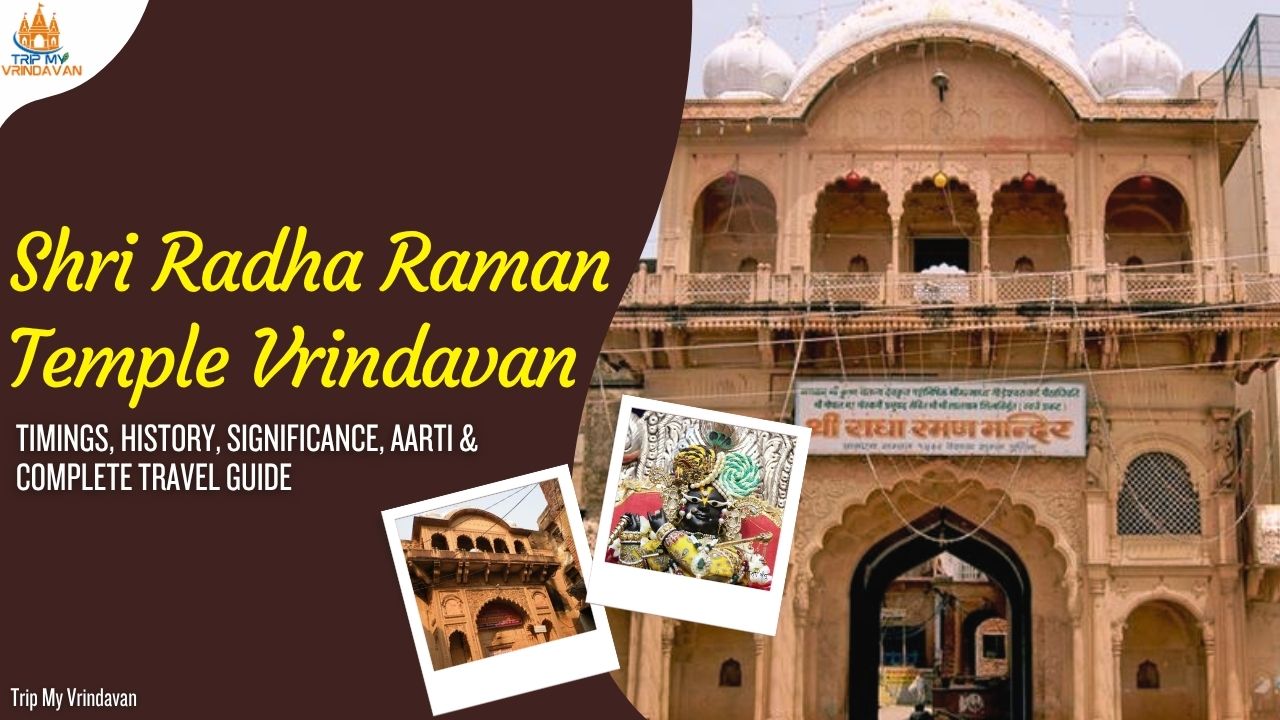
 Complete Guide
Radha Raman Temple Vrindavan: History, Timings, Darshan, Aarti & Complete Guide
Nestled in the spiritual heart of Vrindavan, Radha Raman Temple is one of the most sacred and historically significant Krishna temples in India. Renowned for its self-manifested deity of Lord Krishna, known as Radha Raman Ji, the temple holds exceptional importance in Gaudiya Vaishnav tradition. Established in the 16th century, it continues to preserve authentic rituals, ancient worship practices, and a deeply immersive devotional atmosphere. Unlike grand modern shrines, its spiritual intensity lies in its purity and continuity of seva (service). For pilgrims and travelers alike, Radha Raman Temple offers a rare opportunity to experience living devotion, making it an essential highlight of any Vrindavan pilgrimage.
Radha Raman Temple Timings, Vrindavan – (Complete Darshan Schedule)
Planning your visit to Radha Raman Temple requires a clear understanding of its daily darshan and aarti schedule, which follows traditional Vaishnav rituals and slightly changes with seasons. In general, summer timings (April–October) begin earlier in the morning and extend slightly longer in the evening, while winter timings (November–March) start later due to shorter daylight hours. On most days, devotees can attend morning darshan from around 8:00 AM to 12:30 PM and evening darshan from 6:00 PM to 8:30 PM, though Mangala Aarti occurs much earlier and is highly revered.
Complete Darshan Timings Table
| Season | Morning Darshan | Evening Darshan |
|---|---|---|
| Summer | 7:30 AM – 12:30 PM | 6:00 PM – 9:00 PM |
| Winter | 8:00 AM – 12:30 PM | 5:30 PM – 8:30 PM |
Weekly Darshan Schedule (Monday to Sunday)
- Monday: 8:00 AM – 12:30 PM | 6:00 PM – 8:30 PM
- Tuesday: 8:00 AM – 12:30 PM | 6:00 PM – 8:30 PM
- Wednesday: 8:00 AM – 12:30 PM | 6:00 PM – 8:30 PM
- Thursday: 8:00 AM – 12:30 PM | 6:00 PM – 8:30 PM
- Friday: 8:00 AM – 12:30 PM | 6:00 PM – 8:30 PM
- Saturday: 8:00 AM – 12:30 PM | 6:00 PM – 8:30 PM
- Sunday: 8:00 AM – 12:30 PM | 6:00 PM – 8:30 PM
(Note: Timings remain largely consistent throughout the week, with variations mainly during festivals.)
Radha Raman Temple Aarti Timings
The temple follows a traditional Gaudiya Vaishnav aarti sequence, performed daily with deep devotion and precision.
Daily Aarti Schedule:
- Mangala Aarti (Early Morning): ~4:00 AM (Summer) | ~5:00 AM (Winter)
- Shringar Aarti (Morning): ~8:00 AM
- Rajbhog Aarti (Midday): ~12:00 PM
- Sandhya Aarti (Evening): ~6:30 PM
- Shayan Aarti (Night): ~8:15 PM
Radha Raman Temple History: Origin & Legacy
The sacred Radha Raman Temple traces its origin to the 16th century, during the golden era of Bhakti movement in Vrindavan. The temple was established by the revered Vaishnav saint Gopala Bhatta Goswami, a distinguished disciple of Chaitanya Mahaprabhu, who played a pivotal role in reviving Krishna devotion across India.
Self-Manifested Deity (Swayambhu Appearance)
What sets Radha Raman Temple apart is the miraculous manifestation of its presiding deity. According to authentic Gaudiya Vaishnav scriptures and oral traditions, Gopala Bhatta Goswami was devotedly worshipping twelve Shaligram Shilas, sacred stones representing Lord Vishnu. On the auspicious occasion of Narasimha Jayanti, one of these Shaligrams divinely transformed into the enchanting form of Radha Raman Ji.
This extraordinary event is not considered symbolic but a direct divine revelation, making the deity one of the rare Swayambhu (self-manifested) forms of Lord Krishna in India.
Why Radha Raman Ji is Unique
- The deity was not sculpted or carved by any artisan
- It is believed to have manifested naturally through divine will
- The original Shaligram Shila is still visible on the back of the idol, preserving its sacred origin
- The deity perfectly embodies Krishna’s threefold posture (tribhangi), showcasing unmatched spiritual artistry
Legacy of Continuous Worship
For over 450 years, uninterrupted seva (ritual worship) has been maintained by the direct descendants of Gopala Bhatta Goswami. Despite historical upheavals, including invasions that led to the relocation of many Vrindavan deities, Radha Raman Ji remained in Vrindavan—further strengthening the temple’s spiritual authority and authenticity.
Today, Radha Raman Temple stands not only as a monument of history but as a living center of devotion, preserving centuries-old traditions, rituals, and divine connection that continue to inspire millions of devotees worldwide.
Architectural Significance of Radha Raman Temple
The architecture of Radha Raman Temple reflects the purity and depth of Gaudiya Vaishnav devotion, where spiritual essence takes precedence over grand scale. Built in the sacred town of Vrindavan, the temple represents a refined example of traditional North Indian temple design, preserved in its original form since the 16th century.
Timeless Design Rooted in Devotion
Crafted primarily from red sandstone, the temple carries a warm, earthy aesthetic that blends seamlessly with Vrindavan’s ancient spiritual landscape. Unlike large, ornate temple complexes, Radha Raman Temple is intentionally compact, allowing devotees to experience an intimate and deeply immersive darshan. The sanctum (garbhagriha) is designed to focus attention solely on the deity, intensifying the spiritual connection.
Key Architectural Highlights
- Authentic Red Sandstone Construction reflecting durability and historical continuity
- Compact Sanctum Layout designed for close, personal darshan experiences
- Classic Vaishnav Architectural Style rooted in simplicity, symmetry, and sacred geometry
- Intricate Yet Subtle Carvings that enhance, rather than dominate, the spiritual ambiance
Unique Representation of Radha Rani
One of the most distinctive features of this temple is the absence of a physical idol of Radha. Instead, her divine presence is symbolized through a beautifully adorned crown placed beside Lord Krishna (Radha Raman Ji). This rare tradition reflects deep theological significance within Gaudiya Vaishnavism, emphasizing the inseparable spiritual unity of Radha and Krishna.
Architecture that Preserves Living Tradition
What makes Radha Raman Temple truly exceptional is its untouched authenticity. While many historical temples underwent reconstruction, this temple has retained its original structural and ritual integrity. Every element—from the sanctum design to the altar arrangement—serves a devotional purpose rather than decorative display.
The result is a sacred space where architecture does not overpower spirituality but quietly elevates it, offering devotees an experience that feels both timeless and profoundly divine.
Spiritual Significance of Radha Raman Temple
Deeply rooted in Gaudiya Vaishnav tradition, Radha Raman Temple is revered as one of the seven ancient temples of Vrindavan, representing the pure essence of Krishna Bhakti (devotion). The self-manifested deity and uninterrupted worship since the 16th century create a rare spiritual energy that devotees consider highly transformative. Maintained by the lineage of Gopala Bhatta Goswami, the temple preserves authentic rituals, making each darshan deeply meaningful. Many believe that a single visit here holds the spiritual merit of multiple pilgrimages.
Radha Raman Temple Exterior & Entrance


Major Festivals at Radha Raman Temple
The temple comes alive during key Hindu festivals, offering an intense devotional atmosphere:
- Janmashtami – Grand celebration of Lord Krishna’s birth
- Radhashtami – Honors the divine appearance of Radha Rani
- Narasimha Jayanti – Marks the sacred manifestation of the deity
- Holi in Vrindavan – Spiritually vibrant and colorful celebrations
- Kartik Month – दीपदान (lamp offerings) and continuous bhajans
These occasions attract thousands of devotees, enhancing the temple’s divine aura.
How to Reach Radha Raman Temple, Vrindavan (Location)
- By Road: Well connected via Mathura and Delhi; taxis and buses are easily available
- By Train: Nearest station – Mathura Junction (approx. 12 km)
- By Air: Nearest airport – Indira Gandhi International Airport (approx. 150 km)
One-Day Vrindavan Itinerary- (Most Recommended)
This carefully planned one-day Vrindavan itinerary is designed to cover the most important temples, including Govind Dev Ji Temple, while ensuring a smooth and spiritually fulfilling experience. It is ideal for pilgrims, families, and travelers looking to explore Vrindavan in a single day.
Morning: Divine Beginning with Krishna Darshan (5:30 AM – 11:30 AM)
Start your day early to experience the true spiritual essence of Vrindavan.
- Visit Banke Bihari Temple
Attend Mangala or early morning darshan to avoid heavy crowds. This is one of the most powerful and भक्तिभाव-filled experiences in Vrindavan. - Proceed to Govind Dev Ji Temple
Explore the historic red sandstone temple, admire its architecture, and enjoy a peaceful darshan away from rush. - Visit Radha Raman Temple
Known for its self-manifested deity, this temple offers a deeply spiritual and शांत atmosphere.
Afternoon: Spiritual Exploration & Relaxation (12:00 PM – 4:30 PM)
- Lunch Break
Enjoy satvik food at a local restaurant or your hotel. - Visit ISKCON Temple Vrindavan
Experience international Krishna devotion, soulful kirtans, and peaceful temple surroundings. - Explore Local Markets
Walk through Vrindavan’s streets for souvenirs, पूजा items, and local sweets.
Evening: Mystical Vrindavan Experience (5:00 PM – 8:30 PM)
- Attend Yamuna Aarti at Keshi Ghat
Witness the divine evening aarti on the banks of Yamuna River—one of the most peaceful and visually stunning experiences in Vrindavan. - Visit Nidhivan
Discover the mystical forest associated with Lord Krishna’s Raas Leela.
Conclusion
The sacred Radha Raman Temple stands as a timeless symbol of devotion, purity, and uninterrupted spiritual tradition in Vrindavan. From its miraculous self-manifested deity to centuries-old rituals preserved with precision, every aspect of this temple reflects divine authenticity. Unlike many grand shrines, its true power lies in its simplicity, intimacy, and living legacy of Bhakti. For pilgrims and travelers seeking a deeply meaningful Vrindavan experience, Radha Raman Temple offers more than just darshan—it delivers a profound spiritual connection that stays with devotees long after their visit.
📞 Call Us: +91 7078723132 | +91 9557104160
📲 WhatsApp Us: +91 7078723132 | +91 9557104160
🌐 Visit Our Website: Trip My Vrindavan | Vrindavan Mathura Tourism
🔗Explore all our packages here 👉 View All Packages
🔗 Read Our Blogs for Travel Inspiration: Trip My Vrindavan Blogs
FAQ’s- Radha Raman Temple, Vrindavan
What are the exact darshan timings of Radha Raman Temple?
The temple is generally open for morning darshan from 8:00 AM to 12:30 PM and evening darshan from 6:00 PM to 8:30 PM. Timings may vary slightly depending on season and festivals.
Is Mangala Aarti open to all devotees?
Yes, but Mangala Aarti takes place very early morning (around 4:00–5:00 AM), and entry can be limited due to high demand. Arriving early is recommended.
Is VIP darshan available at Radha Raman Temple?
No formal VIP darshan system exists. However, due to the temple’s compact structure, all devotees can experience close and intimate darshan.
Why is Radha Raman Temple so important?
It is one of the seven ancient temples of Vrindavan and houses a self-manifested (Swayambhu) deity of Lord Krishna, making it extremely sacred in Gaudiya Vaishnav tradition.
What is the best time to visit Radha Raman Temple?
The ideal time is October to March for pleasant weather. Early mornings are best for peaceful darshan, while festivals offer a vibrant spiritual experience.
How can I reach Radha Raman Temple easily?
The temple is easily accessible via Mathura Junction (12 km) and Indira Gandhi International Airport (150 km), with taxis and local transport readily available.
Are there any rules or dress codes for visitors?
Yes, devotees are advised to wear modest attire, maintain silence, and avoid photography inside the sanctum to respect temple traditions.


