
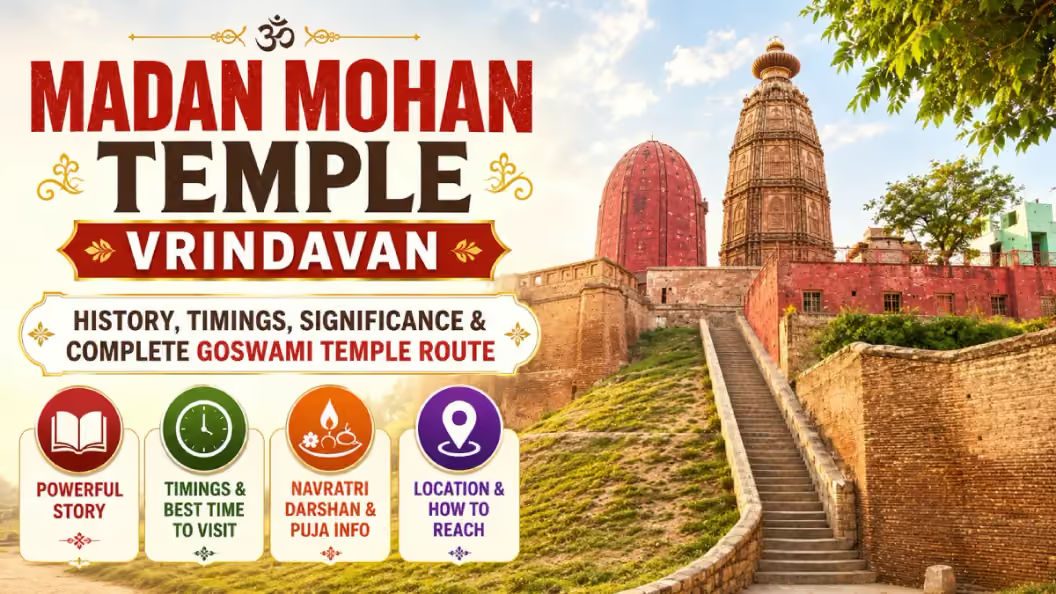
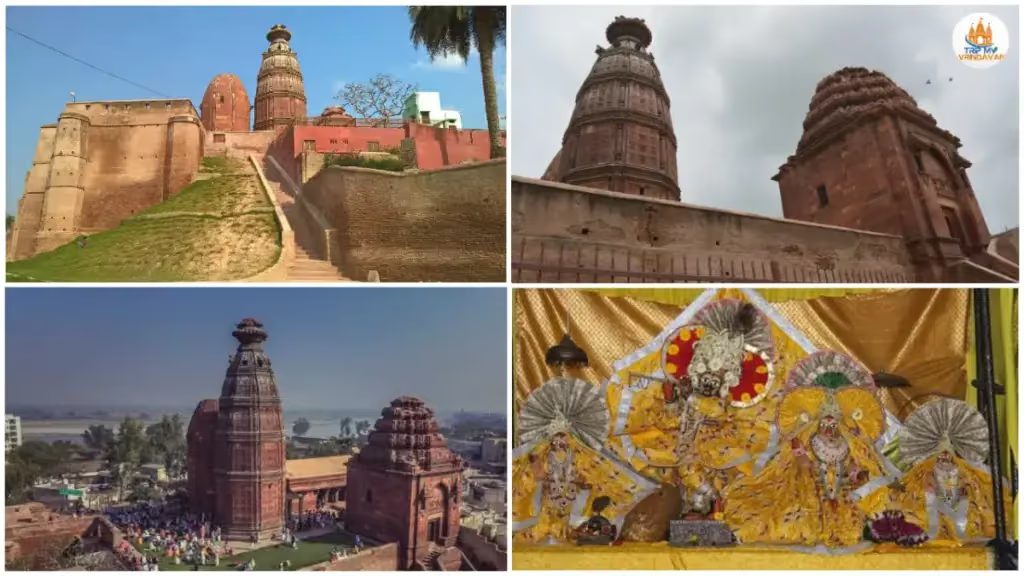
Madan Mohan Temple, situated on top of the elevated Dvadasaditya Tila hillock, is the oldest temple in modern Vrindavan still functioning as a religious sanctuary. Over the centuries, pilgrims who came through the dusty lanes of Vrajanagara have always visited this red stone monument as their starting-point after the legend of the ancient tradition that Sri Madan Mohan is the embodiment of sambandha-tattva, the renewal of the soul's connection with the Almighty.
Are you going to be your first trip as a pilgrim to Uttar Pradesh or just a retracing of those steps of the Gaudiya Vaishnava saints of the 16th century? It would be better to have a map in your hand while exploring the historic central zone of Vrindavan. This article covers the rich historical legacy of the temple, accurately scheduled daily services, the temple's highlights in the form of various architectural styles and also it provides one walkway route to visit all six historic Goswami temples in a single morning.
What makes Madan Mohan Temple so special?
Madan Mohan Temple's major attribute, besides its ancient Radha-Krishna worship and red sandstone architecture traditional to the region is its relationship with the saint Sanatana Goswami. Besides its importance as one of the first pilgrimage spots in Vrindavan's history, it is an excellent religious experience to see the shrine which is the main image of one of the manifestations of Shri Krishna, Madan Mohan. Devotees in this temple usually perform prayers to the divine couple Radha and Lalita together.
Madan Mohan is the temple that has the distinction of being a few hundred feet on an elevated place which makes the structure visible from the surroundings. Since it is just at the banks of Kaliya Ghat, it is one among those few temples in Vrindavan which is quite easily visible. The role of Madan Mohan in Gaudiya Vaishnava history was one of the significant factors that led to Vrindavan becoming one of the important centers for Hindu pilgrimage.
Why is the temple affiliated to Sanatana Goswami?
Sanatana Goswami was one of the main devotees attached to Shri Chaitanya Mahaprabhu's Vrindavan tradition. The Goswamis were mainly responsible for rediscovering sacred spots from where the Krishna's pastimes happened, writing devotional literature and fixing organized worships at important spots all over Vrindavan. It was Madan Mohan who forged a strong friendship with Sanatana Goswami; thereby, the temple became a must-visit spot for devotees interested in this historical phase.
Is the Madan Mohan Temple one of the oldest temples in Vrindavan?
Government tourism sources list it amongst the oldest and most respected temples in Vrindavan. But we all know that temple legends, on the one hand, include architectural findings; on the other hand, they incorporate a fair amount of mythology.
Sometimes one can come across different details about the earliest period, construction stages, and idol worship from various sources. Therefore, if a travel article wants to be trustworthy, it must differentiate between historical truth and legendary stories.
Madan Mohan Temple: History
The history of Shri Radha Madan Mohan Ji Temple Vrindavan is connected closely to the rebirth of Vrindavan as one of the main Vaishnavas' pilgrimage hubs.
Sanatana Goswami and Early Vrindavan Tradition
Vrindavan experienced a significant transformation in the 16th century. The revival of sacred lands of Braj happened mainly due to the teaching of Shri Chaitanya Mahaprabhu and His devotees.
Through the efforts of six Goswamis, it was established that temples would be built at sacred places, sacred geography would be properly documented and the Gaudiya Vaishnavism sect's theological principles would be laid down.
On them Sanatana Goswami is one whom the name Madan Mohan became permanently linked with. So, the temple is not only the physical structure that it represents.
History & Spiritual Origin of Madan Mohan Temple
Srila Sanatana Goswami, a prominent disciple of the great saint Chaitanya Mahaprabhu, is the first to have a connection with the place. He came around the beginning of the 16th century. Vrindavan was still a jungle region full of holy places where the deity tree grew, but not yet the town and temple complexes we know today.
The story of discovering deities is told in legends as well as in the records kept by the temple. It was Sanatana Goswami who found it on the banks of the Yamuna River in very close proximity to it. After worshiping, Sanatana Goswami set up his hermitage near Dvadasaditya hill. This humble sanctuary turned into a grand temple complex as the result of an incident which happened a while ago.
A Kapur Kshatriya, or Ramdas Kapoor according to some sources, participated in this historic change of events. He was a wealthy merchant who sold salt.
- The ship was stuck: In the year of approximately 1580 AD, the commercial barge on the river Yamuna, Ramdas Kapoor, which was transporting salt from place to place got stuck. It was very difficult to take the barge further down the river since the ground was too soft for it due to the high tide and the shallow river.
- The gods showed themselves: Feeling very upset about the monetary loss of all goods that were onboard the barge, Ramdas went up the hill and prayed to Sanatana Goswami and Sri Madan Mohan for blessings
- The Miraculous Rain: After making requests and praying, legend says that a heavy downpour came and raised the river level and thus released the stranded barge. Then he got to sell his cargo in Agra and was able to make a good profit out of it.
- Building the Temple: As a token of his thanks, Ramdas Kapoor gave money for a huge red sandstone temple structure, tower and sacred area which still occupy the space and dominate the scene today.
Architectural Heritage on Dvadasaditya Tila
Srila Sanatana Goswami's Madan Mohan is a different type of structure from the later, more elaborately decorated ones made with the funds during the 19th century, when the temple-building boom was on. The Madan Mohan Temple, through the way of its layout and structure, gives an idea about the early-Mughal as well as medieval Nagara styles.
The red sandstone used for the construction has been hand carved and got the main source from Rajasthan. The tower (shikara), the highest point of the building with the exception of some few spire-like structures built on the flat rooftops of the temples, is of an imposing height over sixty feet. It stands out clearly as one of the few such historic landmarks at the river Yamuna front, where even one gets a glimpse of the building from a distance
Architectural Highlights
- Shikhara of Octagonal: The unique octagonal tower with its spire and delicate band of carving is the distinguishing feature of the main building of the temple. Geometrical accuracy was crucial in preserving the integrity of the structure against weather for more than four centuries.
- Multi-Storied Ground Plan: Visitors will have to go up the steep, narrow staircases to reach a level and vast courtyard through which they can see the Yamuna and the old town of Vrindavan from every side
- A bhajan kutir: the simple abode where the compositions of devotional literature were put in writing, has been conserved next to the main precinct. This is where the samadhi of Srila Sanatana Goswami is as well.
Anyone interested in architectural heritage will appreciate how early builders in the Braj region were capable of creating a sanctuary by mixing the fort-like design of the enclosure with the devotional one. Read more on protected monuments in Uttar Pradesh from
What happened to the original Madan Mohan deity?
It is one of the most talked about topics in connection to the temple's history. Prior to Karauli and the Mughal period, the Mughal empire had removed the original deity Vrindavan. Later, a separate deity was placed in temple Vrindavan for worship. Different websites often use expressions like "original deity", "Madan Mohan deity" and "Madan Mohan temple" interchangeably for a visitor which can be misleading without providing necessary information to the point. The fact is religious succession of Madan Mohan still holds central position between Vrindavan and the Gaudiya Vaishnava tradition although the deity's journey took it beyond Vrindavan
Madan Mohan Temple Timings and Darshan
It is vital to be aware of the schedule as most of Vrindavan temples stay closed during afternoon hours.
Mathura district administrative office announced open hours of the Mahan Mandir as follows:
| Season | Morning Darshan | Evening Darshan |
| Winter | 7:00 AM – 12:00 PM | 4:00 PM – 8:00 PM |
| Summer | 6:00 AM – 11:00 AM | 5:00 PM – 9:30 PM |
Is Madan Mohan Temple open all day?
During the break from opening to the midday closure and from closure to re-opening, there is no temple service or entry permitted. Many a time, tourists reach the temple during this interval if they do not get themselves aware of the timings beforehand. That is one of the worst errors that one should try to avoid while preparing plans for the multi-temple tour of Vrindavan.
What is the best time for Madan Mohan Darshan?
In most cases, an enjoyable time would be to visit the temple in the wee hours of the morning. The major reasons of the ease with which early morning darshan can be undertaken are:
- There is no extreme heat or cold at that time.
- Finding one’s way through Vrindavan is not a hard affair at that time.
- There is also no sunburn risk at that time.
- Your time could equally well be spent visiting some other old temples later on.
Visitors from abroad during the warmer season have to be particularly careful about the earlier morning commencement that is declared by the administrative office of Mathura district.
How much time should you spend at Madan Mohan Temple?
If you are just looking for the regular temple darshan, 45-60 minutes are enough. The time should be more if you have the desire to discover the surrounding areas or to make your way from the temple towards a Kaliya Ghat that is not far away or if you plan to pay a visit to nearby monuments as well.
Radha Damodar Temple and the Goswami Tradition
It becomes all the more significant for you to visit Madan Mohan if you also go to Radha Damodar Temple, because you will thus have the chance of understanding the main points of two momentous events in the early history of how the Goswamicommunity developed in Vrindavan. For example. Mathura district office describes Radha Damodar Temple as one of the main temples of Goswami community in the city and also states the fact for the records that Jiva Goswami established it in 1542.
Why is Radha Damodar Temple important?
Radha Damodar Temple is closely identified with and has historical connections with both Jiva Goswami and Rupa Goswami. As one of the temple documents says, the deities of Radha and Damodar, here, had been manifested by Rupa Goswami who also performed puja and worship with Jiva Goswami of those deities.
The temple also has a record of connecting this temple with major Vaishnavite saints for their devotional works and contributions.
This being the case, the site is, from the point of view of those travelers who are keen on understanding how religion evolved in a given place, is one of the most enlightening ones. Hence, Radha Damodar stands as an essential stop in old Vrindavan for a large number of pilgrims.
| Details | Timings / Information |
| Morning Darshan | 4:30 AM – 1:00 PM |
| Evening Darshan | 4:30 PM – 9:00 PM |
| Best Use in Itinerary | Ideal as an early-morning starting point for a Goswami Temple route |
| Recommended Image | Courtyard or entrance photograph |
Seven Major Goswami Temples of Vrindavan
The Seven Major Goswami Temples of Vrindavan (collectively referred to as the Sapt Devalaya) serve as an inseparable historical and spiritual base for Gaudiya Vaishnavism in Vraja during the medieval times. These temples were initially set up in the 16th century by the disciples of the great saint Chaitanya Mahaprabhu.
They are considered the places which brought to light the sacred spots of Vrindavan and at the same time symbolize the three fundamental spiritual stages namely Sambandha (understanding ones's connection or relationship), Abhidheya (implementation of Bhakti or devotion in one’s life) and Prayojana (attaining the eternal and ultimate goal of love of Radha and Krishna through love).
👉 Same Day Mathura Vrindavan Tour Package
The Sapt Devalaya Overview
| Temple | Founder / Associated Goswami | Spiritual Principle | Key Highlight |
| 1. Radha Madan Mohan Temple | Srila Sanatana Goswami | Sambandha-tattva | Oldest temple structure in Vrindavan, built atop Dvadasaditya Tila by merchant Ramdas Kapoor. |
| 2. Radha Govind Dev Temple | Srila Rupa Goswami | Abhidheya-tattva | Magnificent 7-story red sandstone structure (3 stories remaining post-Aurangzeb era). |
| 3. Radha Gopinath Temple | Srila Madhu Pandit & Raghunath Dasa Goswami | Prayojana-tattva | Discovered under a Vansi Vata tree; original deity relocated to Jaipur during Mughal raids. |
| 4. Radha Damodar Temple | Srila Jiva Goswami | Bhakti-seva | Houses the sacred Govardhan Shila given by Lord Krishna to Sanatana Goswami and Jiva Goswami's Samadhi. |
| 5. Radha Raman Temple | Srila Gopala Bhatta Goswami | Self-manifest (Swayambu) | The deity self-manifested from a Saligram Shila in 1542; sacred cooking fire has burned continuously for 480+ years. |
| 6. Radha Gokulananda Temple | Srila Lokanatha Goswami | Raganuga-bhakti | Houses the deities worshipped by Lokanatha Goswami, Narottama Dasa Thakur, and Visvanatha Chakravarti Thakur. |
| 7. Radha Syamasundara Temple | Srila Syamananda Pandit | Divine Grace | Deity gifted directly to Syamananda Pandit by Srimati Radharani after finding Her ankle bracelet in Nidhivan. |
The following are the most useful tips for Sapt Devalaya Darshan:
- Walking: You can walk all over the old town of Vrindavan and come within 3 kilometers of the seven different temple spots. Therefore, a walking tour of the complete circuit will comfortably take you between 3 and 4 hours.
- Time of day: To experience both the Mangala Arti and the darshan of the deity one should ideally begin the morning walk at 6 a.m. (Summer) or 7am (Winter), thus covering a full cycle of 3 to 4 hours. The afternoon closure (Shayana) happens around 12:00 p.m. So better to plan a morning trip to finish before that.
- Deities Note: The original 16th century Deities of Madan Mohan, Govind Dev, Gopinath were moved to Rajasthan (Karauli and Jaipur) at the end of the 17th century but their Pratibhu-murtis are still the main deities of worship in the original Vrindavan shrines. Apart from those, Radha Raman Ji is one such deity who has always stayed in Vrindavan from 16th century, never moved outside.
One Day Mathura Vrindavan Itinerary
For a one-day trip, start early in Mathura and gradually move towards Vrindavan. This route combines major temples, historic sites and evening darshan without making the schedule unnecessarily rushed.
Morning: Mathura
6:00 AM – Shri Krishna Janmabhoomi
- Start your day with darshan at Shri Krishna Janmabhoomi.
- Spend around 1–1.5 hours exploring the sacred complex.
- Early morning is generally more comfortable for pilgrims.
7:30 AM – Dwarkadhish Temple
- Visit the historic Dwarkadhish Temple.
- Attend morning darshan according to the day's temple schedule.
- Explore the traditional lanes around the temple.
8:30 AM – Vishram Ghat
- Walk along the Yamuna River at Vishram Ghat.
- Spend some peaceful time near the sacred ghat.
- Take photographs from permitted areas.
9:15 AM – Breakfast
- Stop for breakfast in Mathura.
- Try local specialties such as kachori, poori or other vegetarian options.
- Keep the break relatively short to stay on schedule.
Late Morning: Vrindavan
10:00 AM – Madan Mohan Temple
- Travel from Mathura to Vrindavan.
- Begin with Madan Mohan Temple, one of Vrindavan's historic Goswami-associated temples.
- Learn about its connection with Sanatana Goswami.
- Allow around 45–60 minutes.
11:00 AM – Radha Raman Temple
- Continue to Radha Raman Temple.
- Take darshan and explore this important historic shrine.
- Keep some extra time for queues.
12:00 PM – Radha Damodar Temple
- Visit Radha Damodar Temple, associated with Jiva Goswami and Rupa Goswami.
- Explore the historic temple complex.
- This is an important stop for travellers interested in Vrindavan's Goswami tradition.
Afternoon
1:00 PM – Lunch & Rest
- Stop for lunch at a vegetarian restaurant in Vrindavan.
- Take a proper break from walking.
- Rest longer during the summer months because afternoon temperatures can be high.
3:00 PM – ISKCON Krishna-Balaram Mandir
- Visit ISKCON Vrindavan, also known as Krishna-Balaram Mandir.
- Spend time in the temple complex and enjoy its devotional atmosphere.
Evening: Central Vrindavan
4:30 PM – Banke Bihari Temple
- Visit the famous Banke Bihari Temple.
- Check the current darshan timings before travelling.
- Expect crowds, especially on weekends and festival days.
6:00 PM – Nidhivan
- Continue to Nidhivan, one of Vrindavan's renowned sacred sites.
- Follow the site's current entry and visiting guidelines.
- Avoid rushing through the visit.
7:00 PM – Keshi Ghat
- Finish the sightseeing portion of the trip at Keshi Ghat.
- Enjoy the evening atmosphere beside the Yamuna.
- Attend the evening aarti when available according to the day's schedule.
8:00 PM – Dinner & Departure
- Return to your hotel, Mathura, or railway station depending on your onward journey.
- Have dinner in Vrindavan.
Plan Your Mathura Trip with Trip My Vrindavan
Embark on the sacred journey to Mathura, Vrindavan Govardhan, Gokul, Barsana, and Nandgaon is an enriching spiritual experience but without the help of an expert, it might seem daunting. There is a lot to take care of starting from the travel route to managing temple visits efficiently.
Trip My Vrindavan has carefully developed pilgrimage tours and local sightseeing packages to provide the perfect balance of comfort, convenience, and a profound spiritual experience. Every aspect of the tour, right from planning the itinerary to the means of transport, has been thoroughly thought out to cater mainly to family and solo travelers as well as short business trips.
Leveraging our local knowledge and efficient travel planning, you will be able to enjoy the Lord Krishna's sacred territory without the burden of having to take care of all the details yourself.
Benefits of Picking up Trip My Vrindavan
- Hassle-free travel: you don't need to think about the route, transportation, or travel arrangements
- Itineraries that are customisable: We tailor the tours based on your schedule and preferences
- Local knowledge: We will provide you with a real understanding of the culture and the spiritual significance of the places.
- Comfort and Safety: Trustworthy transportation means and well-organized arrangements to avoid any accidents.
- Time efficient: You will be able to see all the major attractions in the shortest possible time frame.
- Deeper Spiritual Experience: You will be able to focus on devotion rather than the hustle of travel.
Your experience with Trip My Vrindavan will not be just another trip but will lead to a deeply spiritual, peaceful, and unforgettable journey.
Also BOOK: Same Day Mathura Vrindavan Tour Package – Explore the top temples and spiritual attractions of Mathura in one day with a well-planned sightseeing itinerary.
Check out Trip My Vrindavan’s travel packages.
plan your upcoming trip with us and experience a divine journey like never before!
plan your upcoming trip with us and experience a divine journey like never before!
📞 Call Us: +91 7078723132 | +91 9557104160
📲 WhatsApp Us: +91 7078723132 | +91 9557104160
🌐 Visit Our Website: Trip My Vrindavan | Vrindavan Mathura Tourism
🔗Explore all our packages here 👉 View All Packages
🔗 Read Our Blogs for Travel Inspiration: Trip My Vrindavan Blogs
How to Reach Madan Mohan Temple
Madan Mohan Temple is located at old Vrindavan near Kaliya Ghat, on the Yamuna-facing side of the town.
From Vrindavan Railway Station
The approximate traveling time as per the map from Vrindavan Railway Station to the temple is 10 mins. However, the real travel time depends on the traffic and the availability of vehicles to come near.
A visitor already based at Vrindavan can use an e-rickshaw or auto for the short trip which significantly reduces the amount of unnecessary walking before starting to walk towards the temple.
From Mathura Junction
If you reach Mathura by train, covering the distance from Mathura to Vrindavan by road is the way you can go. Your travel time may be very different depending on how much traffic is coming in. More precisely on these situations:
- On Holi
- Janmashtami
- Radhashtami
- On weekends and
- Major religious festivals
You must avoid scheduling your temple visit too tightly if you arrive from Mathura on a festival day.
By e-rickshaw or auto
For a lot of visitors, the simplest way to move around is by local transport. Ask the driver to get to the Madan Mohan Temple/Kaliya Ghat area specifically. In the places where it is restricted due to narrow lanes, you also need to walk the last few steps.
Can cars go directly to the temple?
In the older parts of Vrindavan, getting directly in by car is not as easy as around the newer highway-side attractions. Narrow streets and a lot of foot traffic can be a reason for not directly getting to the temple in a car. So, a short walk, in the most part, would be the best choice for getting your feet wet.
The Best Time to Visit Madan Mohan Temple
If you plan your trip around Vrindavan, the cooler days would be a wonderful time.
Particularly you can think of coming during late autumn through early spring. The weather is more comfortable and there will be less time wasted at a walking tour when going to a couple of old temples in the same morning.
Winter
Winter is ideal for walks around ancient heritage sights and for visiting multiple temples. However, the main issue is that festivals and times of pilgrimage can bring huge crowds into major temples.
Summer
With increasing summer temperatures, even moderate exercise can turn unpleasant. On the bright side, summer opens Madan Mohan temple scheduled a bit earlier in the morning which makes an early visit an extra excellent choice. Try to save the walking routes for later when you can avoid the peak hours.
Monsoon
It might get pleasant for the Vrindavan surroundings during rain, but the actual walking through the narrow old alleys would get really unpleasant with a lot of rain. So, it is suggested to not have an over rigid plan.
Festival season
During main festivals, the ambiance of religious devotion might bring many a visitor to tears but, at the same time, the crowds might also increase drastically. Visitors can anticipate:
- More people on road
- Shorter walking distances
- Temple entrances packed with people
- Temple regular activities disturbed
- High competition for hotel rooms
👉Krishna Janmashtami 2026, Date, Puja Timings, VIP Darshan & Mathura Vrindavan Tour Guide
Nearby Places to Visit
One of the major benefits that Madan Mohan Temple brings in its own right beside the great spiritual experience of visiting it is that its site is one of the oldest parts of Vrindavan with lots of history surrounding it.
Kaliya Ghat
Kaliya Ghat's presence is directly tied to Kaliya Mardan, the tale of Krishna slaying Kaliya that took place here. It is not far away from the temple and besides, it is also a traditional Braj pilgrimage landscape spot.
Radha Raman Temple
Radharaman Temple is certainly one of the old Goswami traditions which would make it a good addition to a visitor's experience.
Radha Damodar Temple
If you are going to the very early Goswamis of Vaishnavism, you can say that Radha Damodar Temple would reveal how it all worked in the temples and also the evolution of Vrindavan.
Banke Bihari Temple
Among the first temples to see in Vrindavan, Bankes Bihari is also one of the most popular and it is usually included in the first-time visitor itineraries. Given its popularity, however, it is best not to assume that you will get in immediately if you turn up.
Nidhivan
Nidhivan too is another famous place where you can pray if you are in central Vrindavan. It can be nicely included into your local sightseeing plan.
Govinda Dev Ji Temple
Another place of great interest for lovers of Vrindavan temples, this temple was the reason that the area has become very spiritually significant.
Travelers' Suggestions
1. Check timings before leaving
Online schedules posted for temples might alter during a festival or an extraordinary occasion. If you need a reliable source, then go with the local authorities and if you can, cross-reference the information at the spot on that particular day.
2. Start early
It is particularly helpful for you to be up and out early in summer or, if you are visiting a number of temples as part of a journey.
3. Wear comfortable footwear
Particular places in ancient Vrindavan like lanes, steps, and other narrow passages require a lot of walking. Get some shoes that you will enjoy rather than shoes that are trendy.
4. Carry water
It is crucial that you maintain fluid levels in your body, especially when it is spring, May or the month of June.
5. Dress respectfully
Madan Mohan is a temple in constant operation, so it should not be viewed as a relic alone or for the purposes of a sightseeing tour. Women are not expected to wear short dresses while men should keep it simple. Besides covering the arms and lower body, men's pants should be loose and women's skirts should not be higher than the knee. You also have to observe the customs of the place like not wearing slippers to the temple and other local traditions.
6. Do not make your route too ambitious
Three really good temple visits are generally better than eight quick visits of the sites. Be assured and let your body rest, and the soul be fed in a holy place so that the whole spiritual experience comes with you.
7. Be prepared for monkeys
Monkeys are found in parts of the city of Vrindavan. Keep your personal possessions such as watches, glasses, food items, and small wallets secure, and also avoid any kind of mischief including teasing and feeding animals if the people nearby tell you to stop it.
8. Keep valuables to a minimum
If you have to carry a day bag with some money, food, and small items, it will be far less a burden for you when walking in between the temples with all your luggage.
9. Respect photography rules
Policies regarding photographing inside and of the temple premises will differ in different temples. Listen carefully to what is said by the person from the temple before proceeding and also do not assume that every place is open for taking photos.
10. Allow extra time during festivals
To give a rough example, a walking journey of say about 20 minutes could be extended by several hours depending on the size and location of one of these major religious gatherings.
Madan Mohan vs Radha Damodar Temple
Rare are the tourists who do not know how to get to a temple or which one should go higher up on the priority list as well as the ones who do know.
| Feature | Madan Mohan Temple | Radha Damodar Temple |
| Major association | Sanatana Goswami | Jiva Goswami / Rupa Goswami |
| Character | Historic elevated temple | Historic devotional complex |
| Location | Near Kaliya Ghat | Central old Vrindavan |
| Architecture | Red sandstone historic structure | Traditional temple complex |
| Best for | Heritage + Goswami history | Goswami history + devotional lineage |
Someone visiting Vrindavan for the first time, the better option is to visit both the temples. Together they present a much better and more complete picture of how the Goswami tradition gave shape to the religious life and identity of Vrindavan.
What Should You Know Before Planning a Goswami Temple Route?
Do not plan the route only by looking at a map.
Temple darshan operates on religious schedules, not tourist schedules. A successful itinerary should consider three things:
Temple opening hours
A close by and yet not reachable because the temple closed its doors is possible, for example in case you arrive at a temple while its closing period is on.
Walking distance
Old Vrindavan streets may cause hustle and slower pace than expected.
Weather
A 7 AM route might look comfortable and feasible but in a few hours it can become very tough and exhausting especially during summer. That is why the best time for taking a walk around the ancient Goswami temples is usually before noon.
Conclusion: Madan Mohan Temple Vrindavan
Madan Mohan Temple is a remarkable place to see the beautiful cultural and spiritual richness of Vrindavan. With its Sanatana Goswami connection, traditional design, and proximity to Kaliya Ghat, it is a destination very meaningful for pilgrims and heritage travelers alike.
The trip to Radha Damodar Temple, Radha Raman Temple, and other Goswami shrines together with the visit to Madan Mohan temple can really enrich your pilgrimage and tour to Vrindavan. Do not rush, have the right time, and do a respectful darshan. In case you require a better plan, it is advisable to also see and understand the details in our Vrindavan Temple Schedule 2026 guide before coming here.