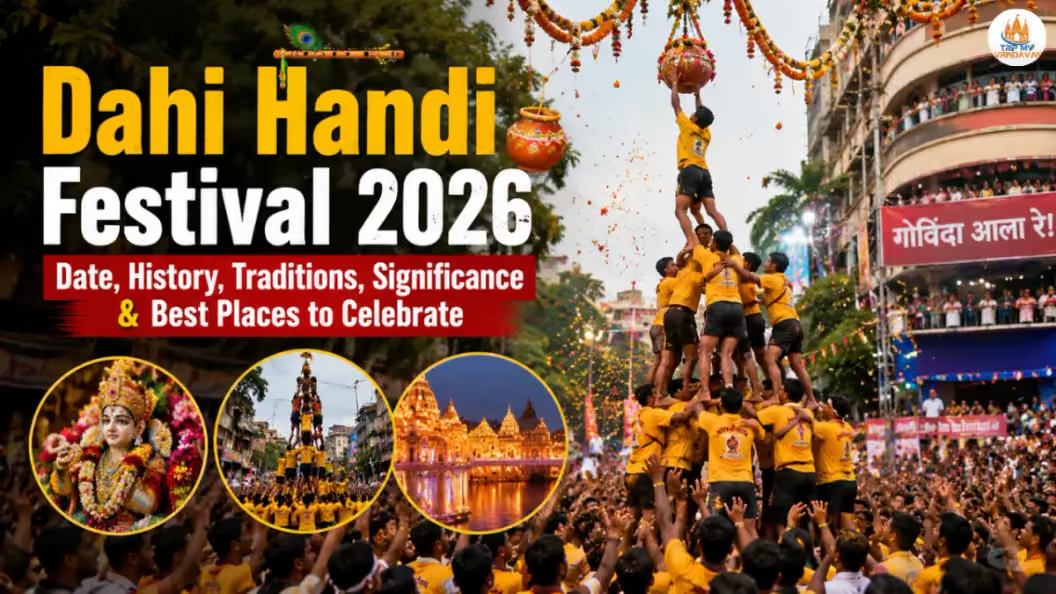
The Dahi Handi Festival is dedicated to Lord Krishna and it is the embodiment of his childhood stories, where he is depicted as a mischievous kid, who had a craving for butter and curd. With the help of his friends, he was known to take advantage of pots being placed high above the ground in the villages of Gokul and Vrindavan to steal butter.
To recreate the scene, teams, known as Govinda’s, build human pyramids that reach up to the decorated clay pot, which is hung out in celebration and filled with curd/butter. Dahi Handi is an activity that has captured the hearts of many and it is celebrated throughout many parts of India, but especially so in the state of Maharashtra where the cities of Mumbai and Thane are the centers for very large scale events. The festival is generally celebrated the day after Janmashtami, which this time around will be 5 September 2026.
What Is the Dahi Handi Festival?
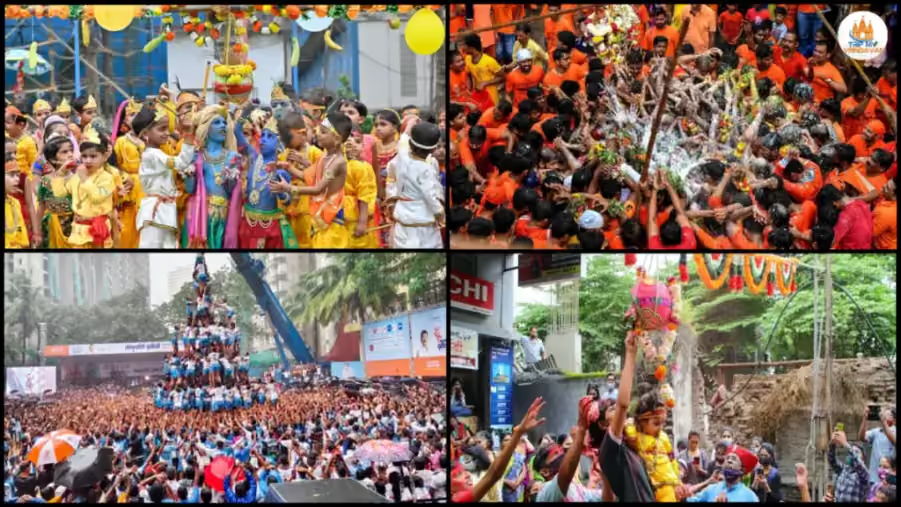
Dahi Handi is a festive ritual that commemorates Lord Krishna's childhood antics during a game called Bal Leela. The terms may seem easy to understand dahi means curd, and handi is an earthen pot. During this festival, a pot filled with dahi, milk, butter, milk, sweets, fruits, or other festive items is hung on a long rope and suspended up high.
Participants, who form "govindas", a group of devotees, climb each other's back and make a multi-tiered human pyramid to reach the pot and then the topmost person breaks the hanging jar. Such act is usually done with the sound of the crowd clapping, people dancing, and musical accompaniment, and chanting of hymns.
This ritual is actually a symbolic representation of how Krishna used to steal pots filled with butter and curd which his parents and the elders had kept out of reach of him, in the guise of a play. The Government of Maharashtra states that one of the celebrations at Janmashtami is Dahi Handi and places Mumbai, Thane, and Pune among its main centers for the celebration.
In time, Dahi Handi has become more than just religious recreation. It has become a major cultural and community event of Maharashtra with neighborhoods competing and participating in it, organizing Govinda Pathak (human pyramid) performances and other cultural programmes, besides.
Dahi Handi Festival Date and Timing
Since Dahi Handi observes a Hindu lunar month calendar and the festival of Krishna Janmashtami it is related to it does not have a permanent calendar date.
It so happened that in 2026, the main Janmashtami celebrations in Mathura and Vrindavan are scheduled on September 5 while the traditional Maharashtrian Dahi Handi celebration will take place on September 5, 2026.
Actually, the timing of each Dahi Handi event is determined by the committee, the locality, and the administration. The large public celebrations can run from morning till evening, with or without a break.
Visitors have to understand that Krishna's miraculous midnight birthday is different from Dahi Handi. While Janmashtami commemorates Krishna's birth, Dahi Handi is more about re-enactment of Krishna's playful butter theft, as a youngster, through the ritual of breaking the high pot with a human pyramid.
| Detail | 2026 Information |
|---|---|
| Dahi Handi Date | Saturday, September 5, 2026 |
| Day | Saturday |
| Main Celebration Time | Daytime to evening |
| Major Celebrations | Mumbai, Thane and other parts of Maharashtra |
| Festival Connection | Krishna Janmashtami |
| Best Time to Attend | Afternoon to early evening |
Note: Event timings can differ between locations, so visitors should check the schedule announced by the local organisers before attending.
👉Krishna Janmashtami 2026 – Complete Festival Guide, Mathura, Vrindavan, VIP Darshan & Itinerary
When Is Dahi Handi Celebrated
It generally takes place around the Krishna Janmashtami and on the day following the main Janmashtami observation in Maharashtra is the traditional day of Dahi Handi.
The Maharashtra Tourism Department informs that Dahi Handi takes place at the time of Janmashtami and it is more prominent in Maharashtra than anywhere else. Practically speaking, the major Govinda performances on public squares in Maharashtra generally take place the day after Krishna's birth celebration, as it is in fact.
The travelers who are interested in visiting the main celebrations in Maharashtra should plan their trips for September 5, 2026, whereas if the destination is Mathura and Vrindavan, the visitors' planning should center upon the period between September 4-5 which is the Janmashtami as well as Nandutsav festival.
Dahi Handi and Janmashtami: What is the Connection?
The link between Dahi Handi and Janmashtami comes from some of Krishna's childhood stories.
Janmashtami, the birthday of Lord Krishna, is, by tradition, celebrated around midnight, the time connected to his descent in Mathura. Dahi Handi is instead the celebration of the playful childhood Krishna who was partial to butter and curd.
That is why these two are connected celebrations having different main points. In Maharashtra, Dahi Handi turned into the most popular public form of Krishna's playful butter-stealing Leela.
The celebration in Brajabandhon region (area of Krishna's birth) takes a devotional broader form.
Mathura and Vrindavan worship Krishna on midnight and perform temple ceremonies, bhajans and kirtans, hold tableaux competitions, and organize the Nandotsava festival, while Dahi Handi-style traditions are also present in Gokul and Nandgaon celebrations at the same time.
Dahi Handi is a fun Hindu festival celebrated day after Krishna Janmashtami, marking the moment Lord Krishna was caught stealing butter when His mischief had become well-known. To give a more comprehensive understanding, these are just some highlights of how people can participate in and learn about Dahi Handi festival.
Enjoy Dahi Handi celebration in Mathura and Vrindavan
The Dahi Handi ceremony, as it is done in Mathura and Vrindavan, is totally unlike the competitive version witnessed in Mumbai. Here one can see the devotion of the people for Krishna in a completely authentic way, Janmashtami rituals, and all the ceremonies of Braj's devotional tradition are part and parcel of this event.
Best Places to Experience the Celebration
- Shri Krishna Janmabhoomi: Mathura, it hosts Janmashtami concerts and celebrations of all the events related to Lord Krishna.
- Dwarkadhish Temple Mathura: Besides festive decorations and special rituals, it gives you an experience of divine atmosphere.
- Banke Bihari Temple Vrindavan: This place is a great way to get immersed in bhakti of Krishna, enjoy temple programmes and festive crowds.
- ISKCON Vrindavan: It houses bhajan, dance, kirtan and cultural programmes that are conducted here along with the special celebration of Lord Krishna's birthdays.
- Prem Mandir: Vrindavan The temple looks so beautiful when decorated and draws a lot of people on the occasion of festival.
- Gokul: Krishna's childhood stories are deeply interwined with it and traditional Nandotsav celebrations are carried out there.
- Nand Gaon: It presents an ideal picture of the village of Braj connected with the childhood memories of Nandas.
What Makes It Special?
It is full of singing of devotional songs, chanting of devotional verses, decorations, and Krishna-related stage plays, Nandotsav which is another significant celebration of the birth and also all kinds of local Braj customs which are traditional and are practiced at these celebrations of Hindu festivals with devotional and spiritual significance.
If one is interested in experiencing the spirituality rather than a competition which is a big part of Dahi Handi festival, Mathura and Vrindavan will prove to be the most suitable places.
Book Your Dahi Handi Trip
Plan your Dahi Handi and Krishna Janmashtami trip to Mathura and Vrindavan and experience the festive atmosphere of Braj. Visit famous Krishna temples, enjoy devotional programmes, witness colourful celebrations, and explore the sacred places connected with Krishna’s childhood.
Why Book With Us?
- Comfortable and well-planned travel
- Private AC cab options
- Flexible sightseeing plans
- Temple and local sightseeing assistance
- Pickup and drop-off options
- Customized Mathura-Vrindavan tour packages
Book Your Trip Today
📞 Call Us: +91 7078723132 | +91 9557104160
📲 WhatsApp Us: +91 7078723132 | +91 9557104160
Book your Dahi Handi trip today and celebrate Krishna’s festival in the spiritual heart of Braj
What is this Dahi Handi Festival All About?
Dahi Handi (that would literally translate as "curd in an earthen pot") is a popular festival mainly centered on teamwork and devotion. It takes place mainly in August, sometimes in September, directly after Janmashtami (the birth of Lord Krishna).
While Janmashtami is mainly the night prayer and fasting part of the Krishna celebration, Dahi Handi is a loud, competitive, and happy street party where the teams try to smash the pot of curd hanging in the air.
Origins and Spiritual Significance
This festival came from the childhood stories of Lord Krishna in Vrindavan.
They know Krishna very well as Makhan Chor (the one who stole butter), little Krishna liked fresh butter and curd most of the time. Why Did Krishna steal the Butter?
Sacred story says Krishna's mother and the village ladies would hang pots of the butter, their clay, high under the house's ceiling, a trick not to give them to Krishna. But then, Krishna would make his friends and they would all make a human pyramid and climb up, reach for the pot of the butter, steal It!, and divide the butter among the other children and monkeys.
Pot breaking and the Human Pyramid
Nowadays, the hanging pot of curd serves as a symbol of one's ego. Destroying the matka (earthen pot) means destroying ego and finding your inner peace. The human pyramid itself is a clear manifestation of unity, devotion, and power of the community.
The Celebration: Govindas and Human Pyramids
The heart of the celebration, Dahi Handi, lies in the creation of massive human pyramids.
- Institution of Govinda Teams: The young men and women who have the most spectacular feats are known as Govinda Pathaks They are trained hard over a period of weeks.
- The human pyramid is a work of art in itself: At the ground level, there are the strongest and at the very top a nimbleness of youth or a child who is light on legs and can jump up the pyramid. They are perfectly balanced as the crowd below cheers them on and throws water at them to emulate the monsoon showers.
- Breaking the Pot: The topmost person (Govinda) uses a coconut (or any blunt object) to smash the container and pour out the mixture of curd, milk, and butter onto his fellow pyramidents below.
Best Spots for Participation
Although the festival is celebrated all across India, there are a couple of places where they are known to celebrate Dahi Handi in a very unique manner:
- Maharashtra: The festival of Dahi Handi gets started in Mumbai and Thane and from there it spreads rapidly to other places. There is no other area which celebrates Dahi Handi in such a grand way as this one. These events have copious amounts of money as prizes, celebrities, etc. They have very high human pyramids (up to 9 levels).
- Uttar Pradesh: Mathura/Vrindavan The town where Krishna was born and passed his childhood days, is where the celebration gets spiritual and traditional. Besides the festival, the bhajans (religious devotional songs) and Krishna-Bhakti (devotion to Krishna) atmosphere make the spirit of the festival all the more vibrant.
Safety legislation and New Forms of Celebration
Along with the popularity going to such a degree the festival also necessitates regulation. Regulations for Safety of Govindas
To prevent injuries judges and authorities at lower levels have issued strict rules These include restrictions by age i.e., a child of 14 years or below cannot be part of the pyramid. Also, the use of safety equipment such as harnesses, helmets, and crash mats is compulsory beneath the pyramid.
Modern celebrations today not only continue to observe and respect the roots of these festivals, but also use social media, live broadcastings of events and community-driven efforts which serve to keep the spirit of Krishna's playfulness alive within the hearts of the new generation.
The Childhood Stories of Lord Krishna
There are many tales of Krishna's childhood that talk about his playful nature, camaraderie, and devotion. One of my favorite tales is about Krishna's addiction to the taste of fresh butter!
Legends have it that the women of the cowherd community, called gopis, would make an enormous effort to save the ghee butter and curd from being touched by Krishna. They hung the pots from the beams of the house to the height, where only a tiny child could reach.
However, Krishna and his friends would always find a way around it. The Govindas would work in unity to reach out to the hanging pot of curd and butter. This is the legend behind the modern day activity of forming human pyramids to be able to reach the elevated pot of the Dahi Handi.
The Ministry of Tourism's official description of the festivity states that the tradition of Dahi Handi is indeed an offshoot of a story from Krishna's childhood at Vrindavan and is connected to a couple of Krishna's tales of when he would join other boys in making human pyramids to the pots which were full of curd and ghee
Why Did Krishna Steal Butter and Curd?
Stories of Krishna stealing butter are usually not interpreted just as stories of theft. In Krishna Bhakti culture, his mischievous activities are part of the Bal Leela, divine playing of his childhood. Butter and curd were main components of diets of the cowherd communities which were associated with the region of Braj, therefore their inclusion into these stories became natural.
The joyous stealing also served as an expression of the special bond of love and friendship between Krishna and the people. Stories depict Krishna as a child whom one easily falls for and whose childish acts actually create a sense of community. To devotees, Dahi Handi, besides being a physical act of breaking the clay pot, means something deeper. It symbolizes and brings to memories the cheerful, light-hearted, and kind nature of Krishna's character.
How the Matki Tradition Became a Festival
The earthen pot, or matki, is now the symbol because old stories talk about butter and curd kept in such pots. At modern festivals, the matki is decorated and then hung in the air. After that, teams of Govindas come together by building a human tower in attempts to touch or break the pot.
Maharashtra, which is the heart of these traditions, turned Krishna's very simple story into a highly popular festival and it was open to the public. Initially, it probably was neighborhood groups that got together for the event, competitions, prizes, music, and bigger public gatherings came gradually to the festival culture.
Nowadays, there are still some teams of Govinda Pathaks who practice for a number of weeks before the festival of Dahi Handi. They transform the Dahi Handi festival from the religious celebration devoted to Krishna to the fun of a challenging team activity.
Religious Significance of Dahi Handi
Dahi Handi is connected with the childhood play (Leela) of Krishna, and thus the festival is rich with religious meanings. The followers of the faith see themselves in Krishna's childlike happiness, innocence, closeness, and playfulness. They consider themselves as the participants of an event that started in Krishna's childhood, which is why the handi breaking is the highlight of the activity.
Besides that, it is the festival, it gives them another way to express their devotion that would usually be done through religious rituals performed at temple. This way they get to have a bit of fun while doing so and that makes participating more enjoyable at the same time.
Symbolism of the Matki
Krishna's playful and childlike nature is reflected in matki which represents butter and curd associated with him. It is a way for the pot, hanging so highway, to show that it is an unachievable goal. The Govindas must work together if they ever wish to touch it.
When the Matki breaks and everyone gets showered with milk, fruits, etc. it symbolizes people's joy and fulfillment being achieved through working together in harmony. The breaking of the Matki is the symbolic representation of people working together to achieve something meaningful while also having fun, the joy of doing it together, and the happiness of sharing the result with one another.
Meaning Behind the Human Pyramid
The human pyramid is the feature of Dahi Handi which is mostly recognized. Every individual in the human pyramid has a specific role they perform; while the people at the bottom ensure the stability of the structure, the human middle provides additional levels of support which makes the structure even higher and the lastly light and nimble member usually makes the final climb. The imagery is clear and deep:
Only the presence of many and the help extended are the things that allow one person to reach the top. Therefore, the human pyramid, aside from just being a visually attractive and interesting spectacle for the audience, also carries a deep meaning of unity, teamwork, and reliance on the strength of the members of the community as a whole.
How Dahi Handi Is Celebrated
Dahi Handi typically involves a very devotional aspect along with music, community gatherings, and breaking the pot. There is variation in what happens at different events. A small celebration could be a local team or community doing an activity and a huge one in Maharashtra could feature lots of Govinda Pathaks competing and getting the prizes.
The overall atmosphere would include drums, devotional songs, dancing, cheering crowds and the like. Decorations are part of the fun as well so you get a very visually appealing picture in the background.
Preparing the Dahi Handi
The pot is the handi and it is commonly made of clay and it will be a pot painted and decorated in many ways for the occasion. Inside it will often be curd, butter, milk, fruits, sweets, or other items as per choice. Afterwards the pot will be suspended from a pole or supported by a structure at height decided by the authorities.
In such an event where a competition is to be held, rules may require that all the organizers and participants decide on the height and the conditions for the Dahi Handi at the same time, if possible.
Formation of Govinda Teams
In this tradition, the members are known as Govindas whereas the groups are referred to as Govinda Pathaks or mandals. These teams might comprise a mix of friends, relations, fellow residents, and even strangers. One of the key points is that the participants have the chance to take part in some fun physical activities by attending a series of training prior to the Janmashtami which mainly focuses on balancing of body, harmony, and unity of actions.
Grosser ones normally lie on the lower layer whereas the ones who are lighter ones, especially the fast ones go to the upper levels.
The Role of the Human Pyramid
In an annual event called Dahi Handi where participants attempt to reach a pot hanging high up without help of any apparatus, a human pyramid serves as the main vehicle for them to perform this feat. One can have several levels in the pyramid where each level is supported by stability of the one underneath it.
The pyramid, being a human structure, naturally needs precise coordination, as an unexpected movement can bring down the entire setup. The person on top is generally referred to as Govinda as per popular understanding around the event who reaches up and shatters the pot.
As such, the activity reflects Dahi Handi which is a tradition that is both devotional and also highly physical.
Breaking the Handi
Once the human pile has reached adequate height for reaching the pot, the member at the top tries to smash the earthen pot which contains the buttermilk.
Conventionally, he might use a branch or a bamboo stick. Upon shattering of the handi, its contents will pour over the pyramids of men. People in the audience will start cheering.
Hitherto, the breaking of the pot by means of human pyramid would be the highlight of the whole festival.
Dahi Handi Celebrations in Maharashtra, Mathura & Vrindavan
Maharashtra Dahi Handi Celebrations
Faith in Krishna and devotion is the primary theme of Dahi Handi and one sees this through community activities, religious observances, competitions for Govinda Pathaks I-e the people forming the human pyramid which is considered as a physical test as the participants have to maintain stability for longer periods.
The three main places for Dahi Handi festivals are Mumbai, Thane, and Pune but the state of Maharashtra also hosts it in several other cities like Navi Mumbai, Kalyan-Dombivli, Nashik, and Nagpur each one of which is celebrated slightly differently.
Mumbai Dahi Handi Celebrations
One of the most exciting aspects of Mumbai's festive atmosphere are celebrations of Dahi Handi.
During the celebration of Krishna's birth, the neighborhoods get converted into celebration zones. Govinda Pathak (a human group that creates a pyramid to reach for the earthen pot hanging from a height) will go around from community to community participating in handis organized by cultural groups, community groups, and the event organizers.
In a few big ones, apart from the handis there will be stages, dance performances, music, prizes, etc., besides lots of spectators.
The shouting of Govinda Aala Re is a signature tune added to all the music and the cultural performances. It reflects the strong cultural identity and is an effective tool to get people into the mood of the festive occasion. It is especially a favorite of Mumbai residents.
Thane, Pune, and Other Major Celebration Hubs
Thane city is popular not only in terms of the quantity of the festivals but also the quality of organizing the Dahi Handi festivals. In Thane, there are organized groups of Govinda Pathaks (pyramid builders) and the events are competitive.
On the other hand, in Pune as per tradition Dahi Handi is the important thing of the town. However, organizers and authorities have recently turned their attention to crowd management and noise regulation. In August 2026, the police department of Pune reminded the people about restrictions regarding loud music during Dahi Handi and Ganapati celebrations. It is possible that similar guidelines will be implemented across other parts of India too.
Dahi Handi in Mathura and Vrindavan
Dahi Handi is very dear to the hearts of Mathura and Vrindavan due to their connection with the story of Krishna's life. Mathura is where Lord Krishna is supposed to have been born and has been the holy city that has inspired generations of artists to depict his life in diverse ways. In contrast, Vrindavan with Braj has been identified as the setting for the playful pastimes and adventures of Lord Krishna in his childhood.
Still, Dahi Handi will not be considered as the most important celebration of Braj Janmashtami there. On the contrary, the atmosphere of the festival will consist of temple worship, kirtan or devotional hymn singing, presentation of different episodes of Krishna's life (Jhankis), Ramleela (which is a dramatic form of storytelling), midnight celebrations, and Nandotsav (a festival held in honor of Nanda Baba, Krishna's foster father).
👉 Shri Krishna Janmashtami 2026 Date: Best Complete Guide to Mathura Vrindavan Temples
Krishna Janmabhoomi and Mathura Celebrations
Mathura witnesses one of India's greatest and most sacred festivals at Janmashtami. The main event is Krishna's birth celebration, in particular the midnight Janmotsav of Shri Krishna Janmabhoomi.
Main Mathura celebrations of 2026 shall take place on September 4, along with special religious and cultural programmes around the festival. Latest development plans consist of enhanced and large-scale cultural programme.
For Dahi Handi lovers, visiting nearby Gokul and other Braj places for an authentic celebration after Janmashtami may be a better idea.
Dahi Handi Festival Rituals, Traditions and Celebrations
Vrindavan’s Krishna-Bhakti Atmosphere
Vrindavan's celebration of Krishna is altogether an experience distinct from that of large and competitive Dahi Handi events in Mumbai. The mood is religious and one's heart is touched by devotional feelings as temples are brightly flowered and brightly ornamented and bhajans, kirtans, and Krishna-themed performances are held.
Vrindavan's major holy places participate in the mood of Krishna Janmashtami and Nandotsav. Further, besides Vrindavan, there are Braj celebrations with Dahi Handi-related ones.
Combining Mathura and Vrindavan is an excellent travel concept when it comes to experiencing the Krishna-Janmashtami festival, as one gets to see the different sides of Krishna's traditions one the religious while the other the cultural that go together to make up a festival in Krishna's name.
Dahi Handi Festival Rituals and Traditions
Dahi Handi celebration traditions differ slightly according to places and communities, nevertheless common elements are: handi decoration, Govinda team organizing, devotion songs singing, drumbeating, festive cooking, etc.
In fact, the main goal is not only to smash a pot, but also the celebration of one particular Leela of Krishna that involves many people, a community affair of Leela sharing.
Bhajans, Music, and Cultural Performances
Songs are integral part of Dahi Handi. Drums and other musical instruments are accompanied by bhajans and devotional songs at Krishna temples. Large public events might also involve dance performances, cultural programmes and stagings by the organizers. The music heightens the excitement of the participants as they form a pyramid and race towards the handi Dance, poetry, etc.
which are integral to cultural activities, have also been seen to provide an avenue to raise spiritual energy in Krishna festivals. They serve a dual purpose: one, to please the Lord through various artistic expressions and two, to delight the devotees, especially those of the Krishna Bhagavata.
Govinda Pathaks and Community Participation
- Govinda Pathaks are the heart of Maharashtra’s Dahi Handi celebrations.
- Teams may represent a locality, family, youth group, or community association.
- Members train together, building teamwork, trust, and a strong group identity.
- The tradition encourages community participation and unity, even beyond the competition.
Prasad and Traditional Food
- Curd, milk, butter, sweets, fruits, and desserts are closely associated with Krishna’s childhood.
- Families prepare traditional sweets and savouries for the celebration.
- Prasad is distributed after religious rituals.
- Maharashtra and Braj have their own local festive and temple-based food traditions.
Dahi Handi Competition Rules and Safety
- Human pyramids require careful planning and safety measures.
- Organisers may regulate pyramid height, participant eligibility, safety equipment, crowd movement, and handi placement.
- Safety has become an important part of modern Dahi Handi events.
- In 2026, Maharashtra announced accident insurance coverage for around 1.6 lakh Govindas.
How Dahi Handi Competitions Work
- Govinda teams gather beneath a suspended or swinging handi.
- Participants form a human pyramid to reach and break the pot.
- Competitions may award points, prizes, or cash rewards.
- Winning criteria can include speed, height, number of handis broken, or successful completion of the challenge.
Safety Measures for Govindas
A safe activity environment should be the first priority of a competition.
Organizational precaution measures should include:
- Only those who have participated in the practice should take part
- The formation of the human pyramid will be supervised by the coach
- Participants will enjoy enough free space around them.
- There must be first aid and other emergency services at hand.
- The participants should not try to outperform the other ones by risk.
- The safety of the children must always be the foremost objective. No children must be brought to any places of danger.
- The spectators, too, have to observe the rules. They are not allowed to be closer than the designated zones
- Police and local authorities must be contacted first.
- Noise level and other matters related to public order must not get out of hand.
- Weather and ground conditions must be taken into consideration.
The more emphasis put on safe practice, the less danger the festival will pose to its participants and that is exactly why Dahi Handi is both a cultural treasure and a physically challenging game.
Dahi Handi Festival Dress, Food and Decorations
Few other occasions can rival the Dahi Handi festival for its bright and vivid decorations. Partakers may wear matching outfits while public places and streets are being hung up the banners, flowers, lights, and multicolored fabrics.
Traditional Clothing
Dancer or Govinda may wear same colored T-shirts, shorts, traditional attire, or costumes that represent their Pathak. Women and the rest of the family coming for celebrations might prefer traditional Indian outfits like sarees, kurtas, or salwar suits etc. for comfort. It is advised to visitors to prefer simple light dresses and also lightweight shoes as a large crowd and rainy weather make this more difficult.
How Homes and Streets Are Decorated
Places for the public gathering including houses, temples and public grounds may be festooned with flowers, lights etc. and paintings of Lord Krishna. The handi is decorated first and then hung from a high place. Various levels of celebrations, the streets can go up in a blaze of colors with temporary stages and sound systems being set up.
Why Dahi Handi Is Important for Indian Culture
Rather than just being a religious celebration, Dahi Handi, for instance, has also become a part of the popular culture, the combination of myth, sports and music, community identity being the underlying themes.
Community Unity and Teamwork
Weaving themselves upwards through human hands, the human pyramid is nothing short of the emblem of a united community. Each climber is entirely reliant on the people below for his or her safety.
The person on top can only reach the handi if people below provide the proper balance and support which is why through a successful human stack, Dahi Handi, it has become such a remarkable representation of collaboration and mutual responsibility.
Keeping Krishna Traditions Alive
In addition to keeping these Krishna childhood stories alive through storytelling, Dahi Handi actually brings people together to celebrate these stories, rather than letting the young generation simply watch and listen.
Children are able to connect to the Krishna stories through Krishna-themed decorations and plays, young people become members of Govinda teams, and families make special foods while the whole community joins in the celebrations. Through this form of celebration, the traditions of the community are easily handed down to the next generation.
The way the tradition is valued is also shown through the current move in Maharashtra seeking UNESCO Intangible Cultural Heritage recognition for Dahi Handi.
Best Places to Experience Dahi Handi
What you will get from a place will define where Dahi Handi will be best for you. If you are looking for mass, exciting celebrations with lots of competition, go to Maharashtra. If you would rather focus on the deep spiritual aspect of Krishna by doing your Dahi Handi celebration in the holy cities of Mathura and Vrindavan you will find that these places are perfect for you.
Mumbai
Mumbai is the place to go if you are into the competitive modern side of Dahi Handi. Govindas performing, beautifully decorated handis, music, crowds and lively public events are just things to look forward to. Since events like this can be very crowded, visitors will have to think really hard about their transport plan and where to view them.
Mathura and Vrindavan
The holy town of Mathura and its suburb, Vrindavan, have the right ambiance if you want your Dahi Handi experience to be combined with the whole life of Krishna's birth and childhood. The scene around them are temples, devotional songs, Janmashtami celebrations, Nandotsav, and Krishna cultural plays.
To have an idea what to do in case a person is in the Indian holy town of Mathura/Vrindavan for the Janmashtami season of 2026, they can plan their visit around the 4 and the 5 of September, when the big Janmashtami and post-Janmashtami festivity takes place.
Other Cities Across India
Some other Dahi Handi festivities are also happening in different pockets of country, e.g., Gujarat, Goa, etc. Each region usually has its own version of the tradition of breaking pot in a devotional aspect of Krishna. These are not exactly like the Dahi Handi tradition of Maharashtrians as one can tell from the different local names, ways of doing things, and also the form of the rituals.
The underlying fact which binds them together is Krishna's childhood games with butter, milk, etc. together with a tradition of kids climbing the stairs and breaking jars etc.
Plan Your Mathura Trip with Trip My Vrindavan
Embark on the sacred journey to Mathura, Vrindavan Govardhan, Gokul, Barsana, and Nandgaon is an enriching spiritual experience but without the help of an expert, it might seem daunting. There is a lot to take care of starting from the travel route to managing temple visits efficiently.
Trip My Vrindavan has carefully developed pilgrimage tours and local sightseeing packages to provide the perfect balance of comfort, convenience, and a profound spiritual experience. Every aspect of the tour, right from planning the itinerary to the means of transport, has been thoroughly thought out to cater mainly to family and solo travelers as well as short business trips.
Leveraging our local knowledge and efficient travel planning, you will be able to enjoy the Lord Krishna's sacred territory without the burden of having to take care of all the details yourself.
Benefits of Picking up Trip My Vrindavan
- Hassle-free travel: you don't need to think about the route, transportation, or travel arrangements
- Itineraries that are customisable: We tailor the tours based on your schedule and preferences
- Local knowledge: We will provide you with a real understanding of the culture and the spiritual significance of the places.
- Comfort and Safety: Trustworthy transportation means and well-organized arrangements to avoid any accidents.
- Time efficient: You will be able to see all the major attractions in the shortest possible time frame.
- Deeper Spiritual Experience: You will be able to focus on devotion rather than the hustle of travel.
Your experience with Trip My Vrindavan will not be just another trip but will lead to a deeply spiritual, peaceful, and unforgettable journey.
Also BOOK: Same Day Mathura Vrindavan Tour Package – Explore the top temples and spiritual attractions of Mathura in one day with a well-planned sightseeing itinerary.
Check out Trip My Vrindavan’s travel packages.
plan your upcoming trip with us and experience a divine journey like never before!
plan your upcoming trip with us and experience a divine journey like never before!
📞 Call Us: +91 7078723132 | +91 9557104160
📲 WhatsApp Us: +91 7078723132 | +91 9557104160
🌐 Visit Our Website: Trip My Vrindavan | Vrindavan Mathura Tourism
🔗Explore all our packages here 👉 View All Packages
🔗 Read Our Blogs for Travel Inspiration: Trip My Vrindavan Blogs
Tips for Visiting Dahi Handi Celebrations
Celebrating Dahi Handi is a great cultural experience, but it will take a lot of thinking especially if there is a big crowd of people. Crowds can become extremely dense, roads may be closed, and public transport can get busy.
Best Time to Arrive
For a major Dahi Handi celebration, it is best to arrive early to avoid heavy crowds and last-minute traffic. Early arrival gives you enough time to reach the venue, find a comfortable viewing spot, and understand the event layout.
In cities such as Mumbai and Thane, roads and public transport routes may be affected by processions and crowd-control arrangements. Always check the local event schedule and traffic updates before leaving, as timings and road restrictions can change.
What to carry
You can bring some essentials with you:
- Bottle of water
- Cell phone
- Extra battery/bank
- Light-sized purse
- Identity documents
- Pedestrian-friendly shoes/wear
- Rain gear if it is raining
- A hand-held bag that can be tied to your body
- Medicines in case
Do not bring precious items or too big packages with you into areas that are super-packed with people.
Important Travel and Safety Tips
- Hold the child's hand and have a meeting place in the event the kids disappear.
- Do not go into the Govinda team's space unless you are a participating member.
- Listen carefully to the police officers and event organizers and follow their directions.
- When the street is very crowded, walk away to a spot that is safe from a crowd before trying to get any closer.
- Water splashing, loud music, wet pavement/s, and unexpected crowding are also expected as you attend this event.
Dahi Handi Festival for Families and Children
Dahi Handi as a family experience is safe, as long as you take a vantage spot. Children may get excited about the decorations, Krishna costumes, music, and cultural dances. However, parents should bear in mind that young children should not be brought into the crowded and human-pyramid zones of the event. A better idea is to pick a viewing point away from where the main activity is happening.
For family trips to Mathura and Vrindavan, temple festivities, Krishna paintings and devotional programs can provide a more relaxed alternative to the highly competitive Dahi Handi competitions.
Modern Dahi Handi Celebrations
Today, the Dahi Handi Festival has become a modern event in many ways, without forgetting its traditional bond with Krishna. One of these changes has been the inclusion of professional organizers, sponsorships, prize money, and the use of social media as well as bigger and larger stages in public spaces.
Social Media and Live Events
Social media's role in Dahi Handi's growth has been major; the audiences have become much wider. Footage with pyramid humans, breaking dahi handi, cultural dance and music can be watched from the far place to which the celebration of Dagi Handi is not even the part of.
At larger scale, the event can use live streaming, sound, and lighting to their advantages. That is how younger generation can explore this tradition, and old-established groups of Govinda can have exposure for them.
Balancing Tradition and Safety
The latest version of this festival also has to continue fun with the serious aspect of responsible fun. The use of even bigger pyramids, larger crowds and competitive prize systems has been on the rise, which results in the physical demands of the festival also getting the hike.
The necessity of having proper training, supervision, medical help on-hand and following strict safety regulations at the site is even a greater one. And of course, the main aim of the whole exercise is to get the playful Leela’s of Krishna celebrated without putting the lives of participants, viewers, and local people at risk.
Conclusion
Dahi Handi Festival is a joyous occasion when myth becomes reality through collective efforts. Motivated by the childhood anecdotes of Krishna and the latter's craving for ghee and curd, the festival, as a symbol, has come to represent devotion, camaraderie, love of teamwork and cultural continuity.
The state of Maharashtra has been, particularly, Mumbai and Thane, known for their spectacular competitions of Govinda and human pyramids. Meanwhile, there are many Janmashtami processions, Nandutsav, temple rituals, bhajans, and traditional festival gatherings throughout the year at Mathura and Vrindavan if one is looking for a more in-depth Krishna Bhakti experience.
Travelers should book their flights for the major Janmashtami celebrations on September 4, and the regular Maharashtrian Dahi Handi festivities around September 5 of the year 2026.
Be sure to experience this fun festival which is a part of the living Krishna traditions in India, whether it is watching the impressive multi-story human pyramids in Mumbai or participating in an act of devotion in Braj.
📞 Call Us: +91 7078723132 | +91 9557104160
📲 WhatsApp Us: +91 7078723132 | +91 9557104160
🌐 Visit Our Website: Trip My Vrindavan | Vrindavan Mathura Tourism