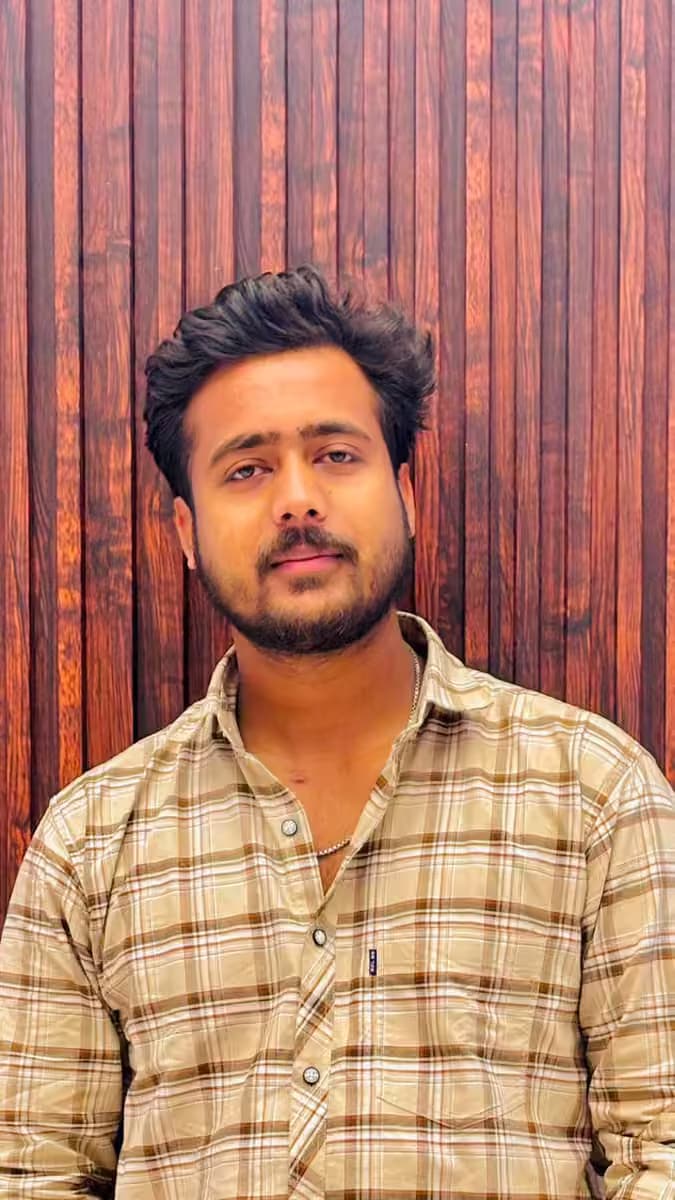
Namaste. I am Rohit, a local guide from Mathura Vrindavan. I have been helping pilgrims for the past 8 years, and every Holi season, I see the same rush. Everyone wants to go to Barsana for the famous stick Holi. But what many travellers miss is the sweet, gentle, and deeply emotional celebration that happens just a few kilometres away in Gokul.
Gokul is not just another town in Braj. It is the village where baby Krishna was raised by Nanda and Yashoda after being carried across the Yamuna. It is where he stole butter, played with the gopis, and performed his first miracles. Because Krishna was an infant here, the Holi of Gokul is not a wild battle; it is a mother’s love expressed through play.
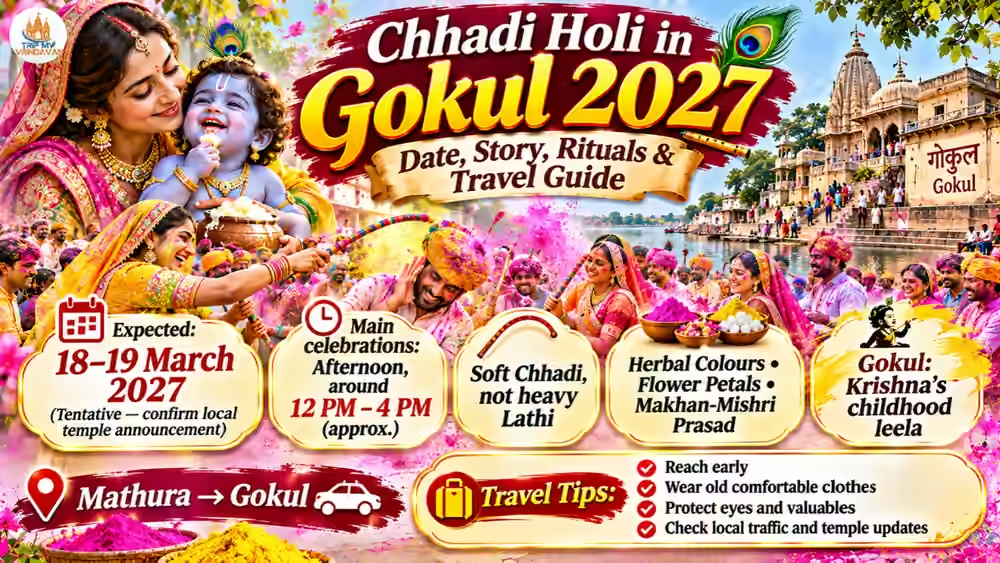
The search results show a slight date discrepancy for 2027. One source lists the event on March 18, 2027, while others list March 19, 2027. This is common in Braj, as temple calendars can shift based on lunar calculations. The safest approach is to plan for March 18 and reconfirm with local temple authorities a week before you travel.
This guide covers everything you need to know about Chhadi Holi in Gokul – the legend, the rituals, the travel options, and the practical tips that make your visit smooth and memorable.
Let us begin.
The Legend Behind Chhadi Holi
The story of Chhadi Holi is rooted in Krishna’s childhood in Gokul.
Baby Krishna is known for being very playful. He used to take away butter from the gopis' pots, tease the gopis, and do playful things. The legends state that the gopis used to run after Baby Krishna while holding small sticks/canes (chhadis) to scold him. However, as Baby Krishna was a baby, the sticks/canes were not meant to harm Baby Krishna in any way. The sticks/canes used were made out of soft/flexible materials and the sticks/canes were used with love.
Chhadi Holi is a reenactment of the divine childhood game. Men in the community act as Krishna and his friends (Gopas) and women act as gopis. Women use chhadis to pursue men, who then use their chhadis to protect themselves and smile. Chhadi Holi is about love and not about aggression.
How Chhadi Holi Unfolds – Step by Step
Here is how the day goes in Gokul.
Morning:
The festivities start at the ancient Nand Bhawan, which is the home of Nanda Baba. The devotees assemble here, and the atmosphere becomes more festive with the singing of bhajans and kirtans.
Afternoon (The Main Event):
At Nand Chowk, the men portraying Kanha and his friends come forward with their shields for protection. The women portraying the gopis carry soft, flexible canes. The women then playfully strike the men while the men smile and hide behind the boards. The entire scene is full of laughter, music and color.
The Prasad:
The devotees will receive Makhan-Mishri (fresh white butter and candy) after the ritual. Baby Krishna was fond of this food, and receiving it as prasad is viewed as an honor.
Evening:
The festivities come to a close. Devotees travel to adjacent temples, and the town is restored to its quiet routine.
Why It Is Different from Lathmar Holi
Many travelers get confused about the difference between Chhadi Holi and Lathmar Holi. While both have the same spirit, they differ in how they are celebrated.
|
Aspect
|
Chhadi Holi (Gokul)
|
Lathmar Holi (Barsana/Nandgaon)
|
|
The Stick
|
Soft, flexible canes (chhadis)
|
Heavy lathis (staves)
|
|
The Spirit
|
Tender, playful, motherly
|
Boisterous, energetic, youthful
|
|
The Crowd
|
Gentler, less intense
|
Massive, high-energy
|
|
Best For
|
Families, elders, first-timers
|
Those seeking the wild spectacle
|
Chhadi Holi is a much softer version of Lathmar Holi. You can have fun on this Holi with your parents and children, without having to worry about being crushed.
The Best Places to Experience It
Nand Bhawan: This is where the festivities begin and it's also where you can get a glimpse (darshan) of the Gods.
Nand Chowk: The central location of the Chhadi Mar ritual. The place of action.
Brahmand Ghat: This is where Yashoda saw the whole universe when she looked into Krishna’s mouth. It is a quiet place to reflect on things.
The ancient Shiva temple called Chinta Haran Mahadev Temple is linked to the childhood of Krishna.
How to Reach Gokul
Gokul is about 15 km from Mathura and 25 km from Vrindavan.
By Private Cab:
Mathura is approximately a thirty-minute drive. Vrindavan is roughly forty-five minutes. Delhi is roughly three and one-half to four hours to Mathura, followed by approximately thirty minutes to Gokul.
By Train:
Nearest station is Mathura Junction. From there, autos and taxis are available.
By Air:
Nearest airport is Delhi IGI. From there, road travel via Yamuna Expressway.
Important: During Holi, roads near Gokul are busy. Plan to arrive early.
Nearby Parking and Transport
Parking near Nand Bhawan is limited during the festival.
|
Parking Area
|
Distance from Nand Bhawan
|
Notes
|
|
Gokul Main Road Parking
|
~500 m
|
Limited, fills early
|
|
Gokul Bus Stand
|
~1 km
|
Paid parking
|
|
Nand Bhawan Area
|
~1.5 km
|
For larger vehicles
|
Local Transport:
- E-rickshaws: ₹20–₹40 per ride.
- Autos: Available but cannot reach all areas directly.
- Walking: The last stretch to Nand Bhawan is on foot.
What to Wear and Carry
What to Wear:
- Old white cotton clothes (you will be colored).
- Comfortable closed shoes.
- Sunglasses for eye protection.
- A hat or cap.
What to Carry:
- Waterproof pouch for phone and wallet.
- Water bottle.
- Cash (ATMs run out during Holi).
- A change of clothes.
- Coconut oil or petroleum jelly (apply on skin before colour).
What Not to Carry:
- Expensive jewellery.
- Large bags.
- Electronics that are not protected.
Other Places to Visit in Gokul
While you are in Gokul for the festival, do not miss these nearby sites:
- Nand Bhawan: The palace of Nanda and Yashoda.
- Raman Reti: The sacred sands where Krishna played as a child.
- Brahmand Ghat: Where Yashoda saw the universe in Krishna’s mouth.
- Chinta Haran Mahadev Temple: An ancient Shiva temple.
- Gokulnath Temple: The main temple dedicated to Lord Krishna.
What to Eat in Gokul
Gokul is a small town, but the local food is simple and delicious.
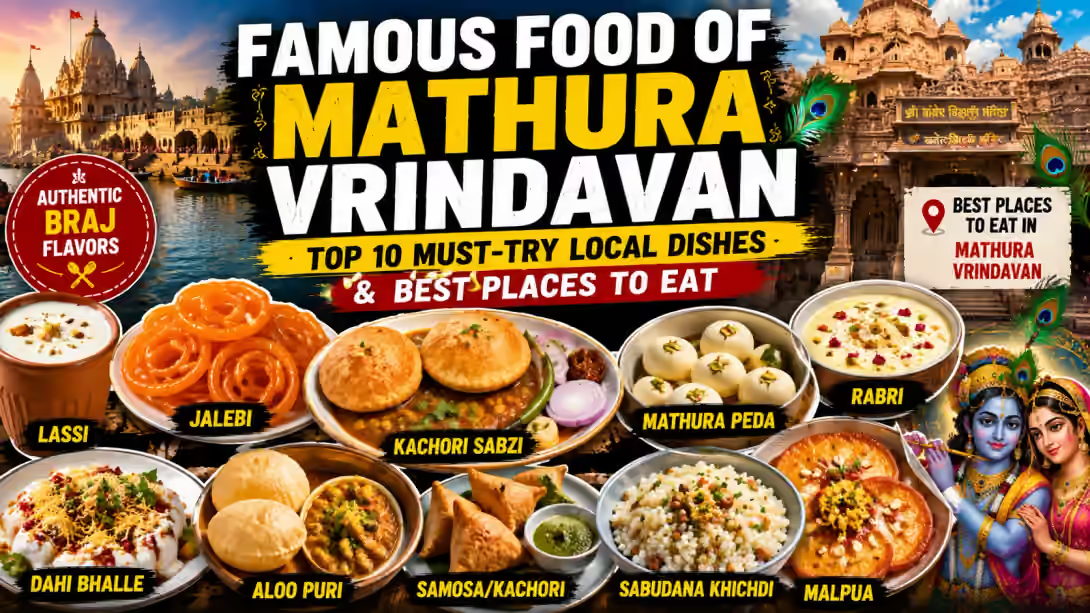
- Makhan-Mishri: The traditional prasad of butter and sugar candy.
- Kachori Sabzi: A spicy, crispy breakfast staple.
- Jalebi: Hot, fresh, and sweet.
- Local Thali: Simple, pure vegetarian meals served at dhabas.
Conclusion
Chhadi Holi is more than a celebration; it's an emotion. It's the gentle affection of Gokul, the light touch of the chhadi (stick), and the sweet flavor of Makhan-Mishri (butter-sugar mixture). While Barsana's Lathmar Holi is loud and flashy, Gokul's Chhadi Holi is soft and emotional. Since it is much less popular than Lathmar Holi, it has fewer visitors, so it is a more peaceful, comfortable way to celebrate Holi, particularly for families and seniors. If you are able to travel to Gokul on March 18th, 2027, then do so. Participate in the parade through the old streets near Nand Chowk. Allow a gopi (cowherd woman) to tap you with a soft chhadi in order to receive her blessing. Receive the Makhan-Mishri prasad. And experience the tenderness of the dhama (holy land) where the Lord was a child. This is Holi celebrated not as a display of power or strength, but as a mother's love. Radhe Radhe
Plan Your Chhadi Holi 2027 Trip
For bookings, queries, and custom packages:
Call Us: +91 7078723132 | +91 9557104160
WhatsApp Us: +91 7078723132 | +919557104160
WhatsApp Us: +91 7078723132 | +919557104160
Hours: 8 AM to 9 PM daily
Our Services:
- Chhadi Holi Tour Packages 2027
- Private AC Cab for Braj Holi Circuit
- Local Guide for Safe Viewing
- Hotel Reservations in Vrindavan / Mathura
- Makhan-Mishri Prasad Arrangements
- Customized Holi Itineraries for Families, Couples, and Groups